생성형 AI를 넘어 업무 실행의 시대…인간에게 요구되는 역할도 달라지고 있다
생성형 AI는 불과 몇 년 만에 업무 환경을 바꾸었다. 문서를 작성하고, 이미지를 생성하며, 프로그래밍을 지원하는 등 인간의 생산성을 높이는 도구로 빠르게 자리 잡았다.
그러나 최근 글로벌 AI 산업의 화두는 더 이상 생성형 AI 자체가 아니다. Microsoft와 OpenAI, Anthropic을 비롯한 주요 AI 기업들은 이제 AI 에이전트(AI Agent)를 차세대 인공지능의 핵심 방향으로 제시하고 있다.
이 변화는 새로운 기능이 추가됐다는 의미를 넘어선다. AI가 콘텐츠를 생성하는 도구에서 업무를 수행하는 시스템으로 발전하면서, 인간에게 요구되는 역량 역시 새로운 방향으로 변화하고 있기 때문이다.
AI는 생성을 넘어 실행으로 진화하고 있다
생성형 AI는 질문에 답하고, 글을 작성하며, 이미지를 만드는 등 개별 작업(Task)을 수행하는 데 강점을 보인다.
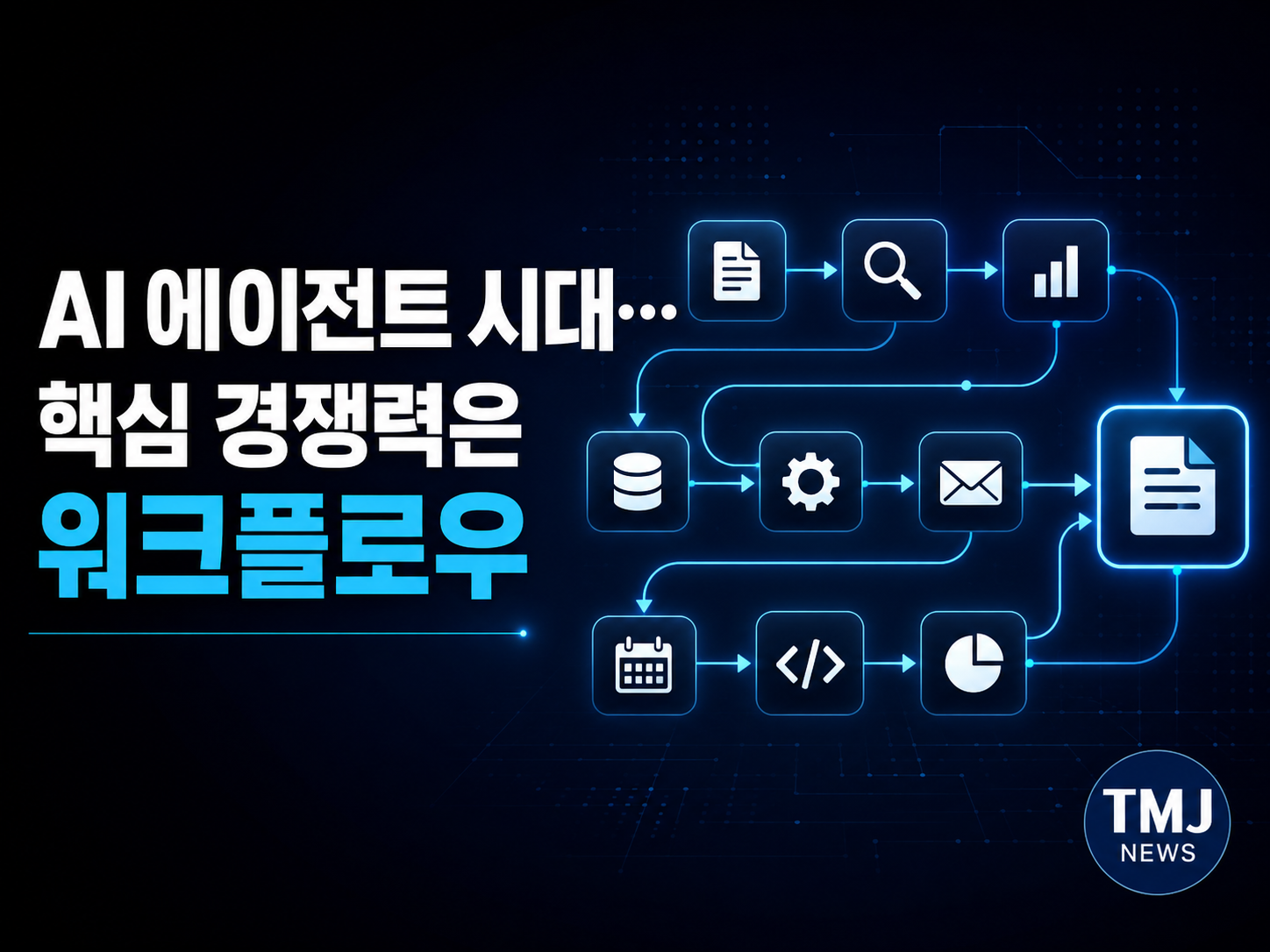
반면 AI 에이전트는 하나의 목표를 달성하기 위해 여러 작업을 이어 수행한다. 필요한 정보를 검색하고, 자료를 분석하며, 외부 프로그램과 연동해 결과를 만들고, 다음 단계의 업무까지 스스로 이어가는 방식이다.
OpenAI는 이러한 특성을 기존의 단순 질의응답과 구분해 ‘장기적인 업무 수행(Long-horizon tasks)’으로 설명한다. 즉 질문에 답하는 수준을 넘어 목표를 부여받고 여러 단계를 거쳐 업무를 수행하는 형태로 발전하고 있다는 의미다.
다시 말해 생성형 AI가 ‘무엇을 만들 것인가’를 해결했다면, AI 에이전트는 ‘어떻게 일을 수행할 것인가’를 해결하는 방향으로 발전하고 있다.
기업이 주목하는 것은 AI가 아니라 워크플로우다
AI 에이전트가 주목받는 이유는 기술 자체보다 기업의 생산성과 연결되기 때문이다.
기업의 경쟁력은 개별 작업의 속도보다 업무 전체를 얼마나 효율적으로 운영하는지에 달려 있다. 따라서 AI 도입의 목적도 개별 업무를 자동화하는 데 그치지 않고, 전체 업무 흐름을 최적화하는 데 있다.
이를 위해서는 하나의 작업보다 여러 업무가 유기적으로 이어져야 한다.
경영학에서 오래전부터 연구되어 온 비즈니스 프로세스 관리(Business Process Management, BPM) 역시 업무를 개별 기능이 아니라 하나의 흐름으로 관리하는 것을 핵심 원리로 삼는다.
McKinsey를 비롯한 글로벌 컨설팅 업계는 AI의 효과를 높이기 위해서는 개별 업무 자동화를 넘어 업무 프로세스 전반을 재설계하는 접근이 중요하다고 분석하고 있다.
AI 에이전트는 이러한 업무 흐름을 실제로 수행하는 기술이라는 점에서 기존 생성형 AI와 차별화된다.
AI가 바꾸는 것은 직업보다 업무 수행 방식이다
AI 기술이 발전할 때마다 가장 많이 등장하는 질문은 ‘인간의 일자리가 사라질 것인가’이다.
그러나 현재 글로벌 기업과 연구기관은 AI가 직업 자체보다 업무 수행 방식을 어떻게 바꾸는지에 더 주목하고 있다.
반복적이고 규칙이 명확한 업무는 AI 에이전트가 빠르게 수행할 가능성이 높다.
반면 목표를 설정하고, 우선순위를 정하며, 예외 상황을 판단하고, 결과에 책임을 지는 역할은 여전히 인간의 판단이 요구된다.
이는 같은 직업 안에서도 업무의 성격이 달라질 수 있음을 의미한다.
AI 시대의 경쟁은 사람과 AI의 대결이 아니라, 변화한 업무 환경에 얼마나 빠르게 적응하느냐에 달려 있다는 분석이 설득력을 얻고 있다.
모든 것을 알 필요는 없다…그러나 연결할 줄은 알아야 한다
AI 에이전트 시대가 모든 사람에게 개발자 수준의 전문지식을 요구하는 것은 아니다.
새로운 AI 서비스와 기술은 앞으로도 계속 등장할 것이며, 모든 기술을 깊이 이해하는 것은 현실적으로 불가능하다.
오히려 중요한 것은 자신의 업무를 구조적으로 이해하는 능력이다.
어떤 과정으로 업무가 진행되는지, 어느 단계는 AI가 수행할 수 있는지, 어느 단계는 사람이 직접 판단해야 하는지를 이해하는 것이 AI 활용의 출발점이 된다.
결국 핵심은 업무를 하나의 시스템으로 이해하는 사고방식이다.
Microsoft를 비롯한 글로벌 AI 기업들은 여러 AI와 디지털 도구를 통합해 업무를 설계하고 관리하는 ‘오케스트레이션(Orchestration)’의 중요성을 강조하고 있다. 이는 모든 업무를 직접 수행하기보다 사람과 AI, 다양한 시스템을 조율하는 역할의 가치가 커지고 있음을 보여준다.
앞으로 학습해야 하는 것은 기술보다 사고방식이다
세계경제포럼(WEF)은 『Future of Jobs Report 2025』에서 분석적 사고(Analytical Thinking), 시스템 사고(Systems Thinking), AI 활용 역량, 지속적인 학습 등을 미래 핵심 역량으로 제시했다.
공통점은 특정 프로그램을 다루는 기술보다 변화에 적응하고 문제를 해결하는 능력을 강조한다는 점이다.
AI 에이전트 시대의 학습도 같은 방향으로 변화하고 있다.
AI 시대의 학습은 새로운 서비스를 많이 아는 데서 끝나지 않는다. 변화하는 업무 환경 속에서 자신의 역할을 새롭게 설계하는 일이 더욱 중요해지고 있다.
업무를 구조화하고, AI와 사람이 각각 담당할 영역을 구분하며, 결과를 검증하고 개선하는 능력은 앞으로 대부분의 산업에서 더욱 중요해질 가능성이 크다.
AI 시대의 경쟁력은 ‘얼마나 아는가’보다 ‘어떻게 연결하는가’에 있다
생성형 AI는 인간의 생산성을 높였다.
AI 에이전트는 인간의 업무 방식을 변화시키고 있다.
앞으로는 폭넓은 지식을 모두 갖춘 전문가보다 필요한 지식과 기술을 통합해 하나의 업무 흐름을 설계할 수 있는 사람이 더욱 경쟁력을 갖게 될 가능성이 크다.
결국 AI 에이전트 시대의 핵심 경쟁력은 특정 AI를 얼마나 잘 사용하는가에만 있지 않다. 변화하는 업무를 이해하고, 사람과 AI가 가장 효과적으로 협업할 수 있는 워크플로우를 설계하는 능력이 개인과 조직의 새로운 경쟁력으로 자리 잡고 있다.
The AI Agent Era: Workflow Is the New Competitive Advantage
Beyond Generative AI: The Age of Task Execution Is Redefining Human Roles
Generative AI has transformed the workplace in just a few years. From writing documents and creating images to assisting with programming, it has quickly established itself as a powerful tool for improving human productivity.
Today, however, the focus of the global AI industry has shifted beyond generative AI itself. Leading AI companies, including Microsoft, OpenAI, and Anthropic, are positioning AI agents as the next major direction for artificial intelligence.
This shift represents more than the addition of new features. As AI evolves from a tool that generates content into a system capable of carrying out work, the capabilities expected of people are evolving as well.
AI Is Evolving from Creation to Execution
Generative AI excels at performing individual tasks such as answering questions, writing text, and generating images.
AI agents, by contrast, pursue a goal by carrying out multiple connected tasks. They can search for information, analyze data, interact with external applications, produce results, and continue to the next stage of work with minimal human intervention.
OpenAI describes this capability as “long-horizon tasks,” distinguishing it from traditional question-and-answer interactions. Rather than responding to a single prompt, AI agents are designed to complete objectives through a sequence of coordinated actions.
In other words, if generative AI answered the question of what to create, AI agents are increasingly addressing how work gets done.
Businesses Are Focusing on Workflows, Not AI Alone
The growing interest in AI agents is driven less by the technology itself than by their potential to improve organizational productivity.
A company’s competitiveness depends not simply on producing documents faster, but on delivering value to customers through efficient operations. As a result, organizations are increasingly looking beyond automating isolated tasks and toward optimizing entire workflows.
This idea aligns with the long-established discipline of Business Process Management (BPM), which emphasizes managing work as an integrated process rather than as disconnected functions.
Global consulting firms, including McKinsey, have argued that organizations achieve the greatest value from AI when they redesign business processes instead of merely adding AI to existing tasks.
In this sense, AI agents differ from traditional generative AI by actively participating in the execution of workflows rather than assisting with individual activities.
AI Is Transforming the Way We Work
Whenever AI advances, the same question arises: Will AI replace human jobs?
Today, however, businesses and research institutions are paying closer attention to how AI changes the way work is performed rather than whether occupations themselves disappear.
Repetitive and rule-based work is increasingly suited to AI agents.
Meanwhile, setting objectives, prioritizing decisions, handling exceptions, and taking responsibility for outcomes remain fundamentally human responsibilities.
This suggests that the nature of work within existing professions is changing.
Rather than a competition between humans and AI, the emerging challenge is how quickly individuals can adapt to new ways of working.
You Don’t Need to Know Everything—But You Need to Connect the Pieces
The AI agent era does not require everyone to become a software developer.
New AI services and technologies will continue to emerge, making it unrealistic for anyone to master every tool.
Instead, the more valuable skill is understanding the structure of one’s own work.
Knowing how a workflow operates, which stages AI can perform, and where human judgment remains essential provides the foundation for effective AI adoption.
Ultimately, the key is developing a systems-oriented perspective on work.
Microsoft and other global AI companies increasingly emphasize orchestration—the ability to coordinate AI systems, digital tools, and human expertise. The greatest value often comes not from performing every task personally, but from designing and managing the overall workflow.
The Future of Learning Is About Mindset, Not Just Technology
In its Future of Jobs Report 2025, the World Economic Forum (WEF) identifies analytical thinking, systems thinking, AI literacy, and lifelong learning as among the most important future skills.
These competencies share a common theme: success depends less on mastering a particular software application than on adapting to change and solving increasingly complex problems.
Learning in the AI agent era follows the same principle.
The challenge is no longer simply learning another AI tool. It is rethinking one’s role within an evolving work environment.
The ability to structure work, determine where AI and humans each add value, verify outcomes, and continuously improve processes is likely to become increasingly important across nearly every industry.
The New Competitive Advantage Lies in Connecting, Not Just Knowing
Generative AI has significantly enhanced human productivity.
AI agents are beginning to reshape the way work itself is performed.
The future will favor those who can integrate knowledge, technology, and human judgment into effective workflows rather than those who simply possess the most information.
Ultimately, the defining competitive advantage in the AI agent era will not be how well someone uses a particular AI tool. It will be the ability to understand changing work, design effective workflows, and enable productive collaboration between people and AI.
저작권자 © '더미디어저널리스트' 무단전재 및 재배포, AI학습 및 활용 금지
작성자 소개