공동의회 개회 기준 완화·재산 조항 정비… 교회 운영체계 변화 주목
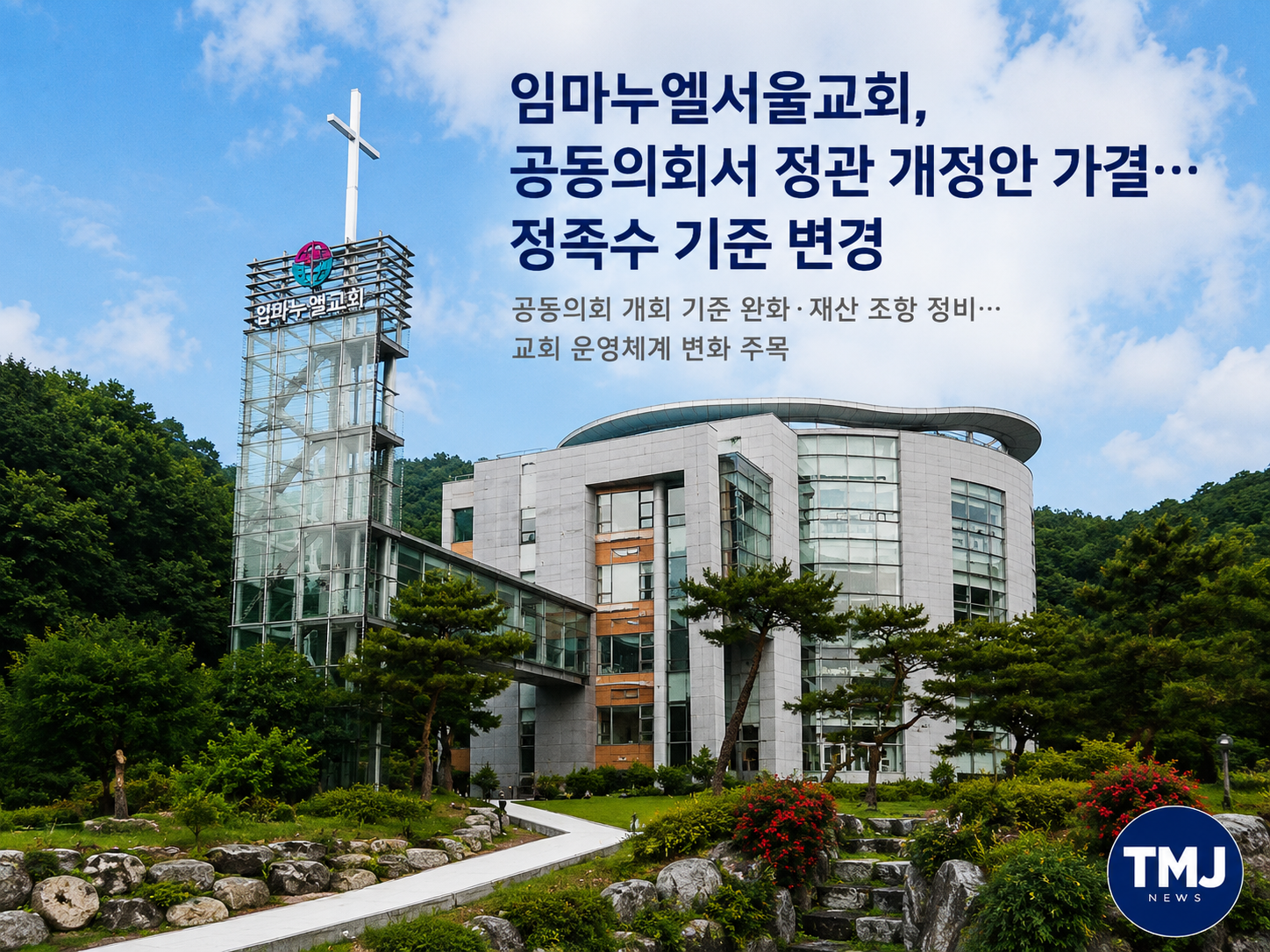
임마누엘서울교회는 2026년 6월 21일 공동의회를 열고 공동의회 개회 기준과 교회 재산 관련 조항을 담은 정관 개정안을 의결했다고 밝혔다.
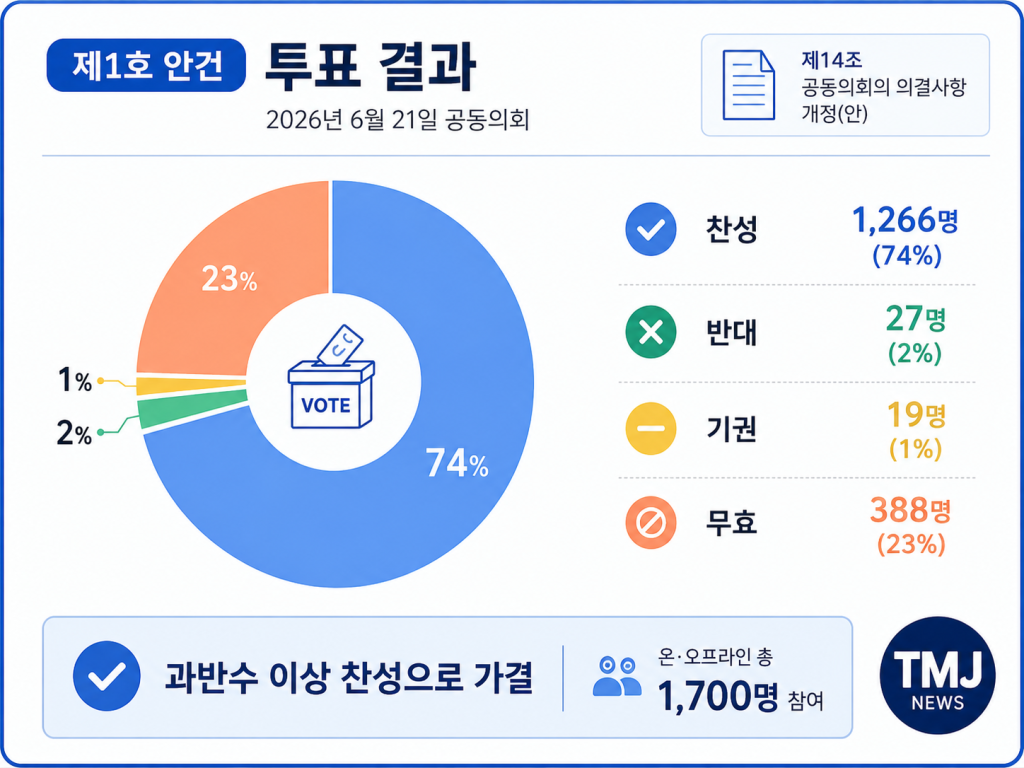
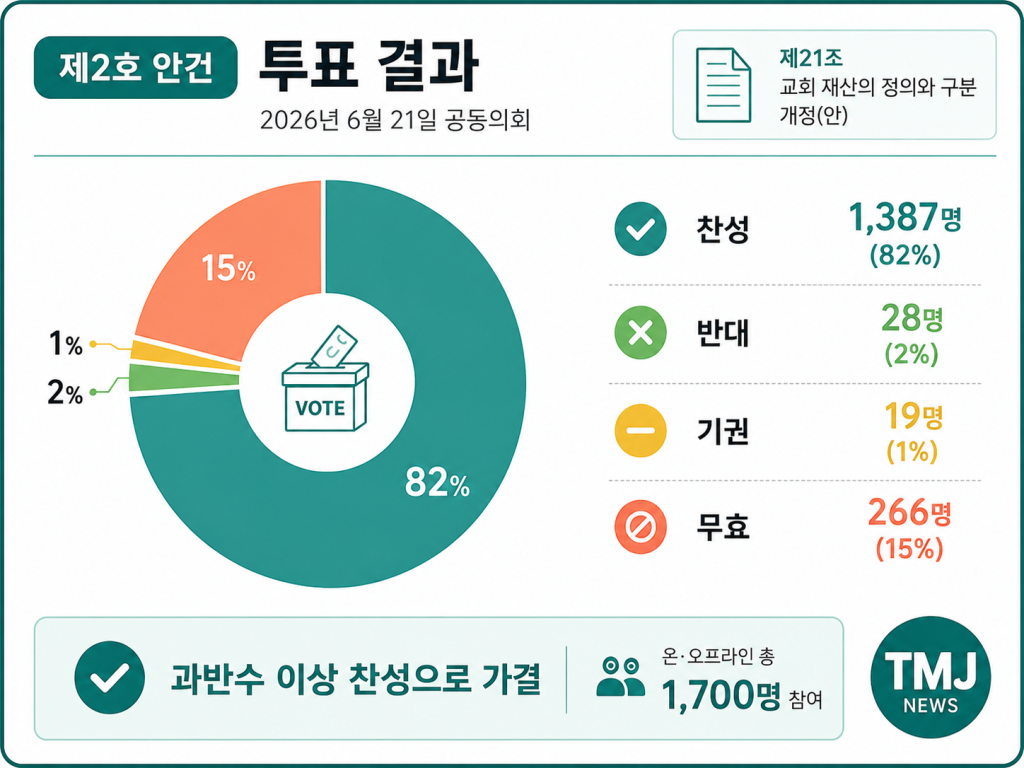
교회 측에 따르면 온·오프라인을 포함한 전체 투표 참여자는 1,700명이며, 두 안건 모두 과반수 이상의 찬성을 얻어 통과됐다.
공동의회 개회 기준 어떻게 달라지나
이번 개정안 가운데 가장 큰 변화는 제14조 공동의회 의결사항 조항이다.
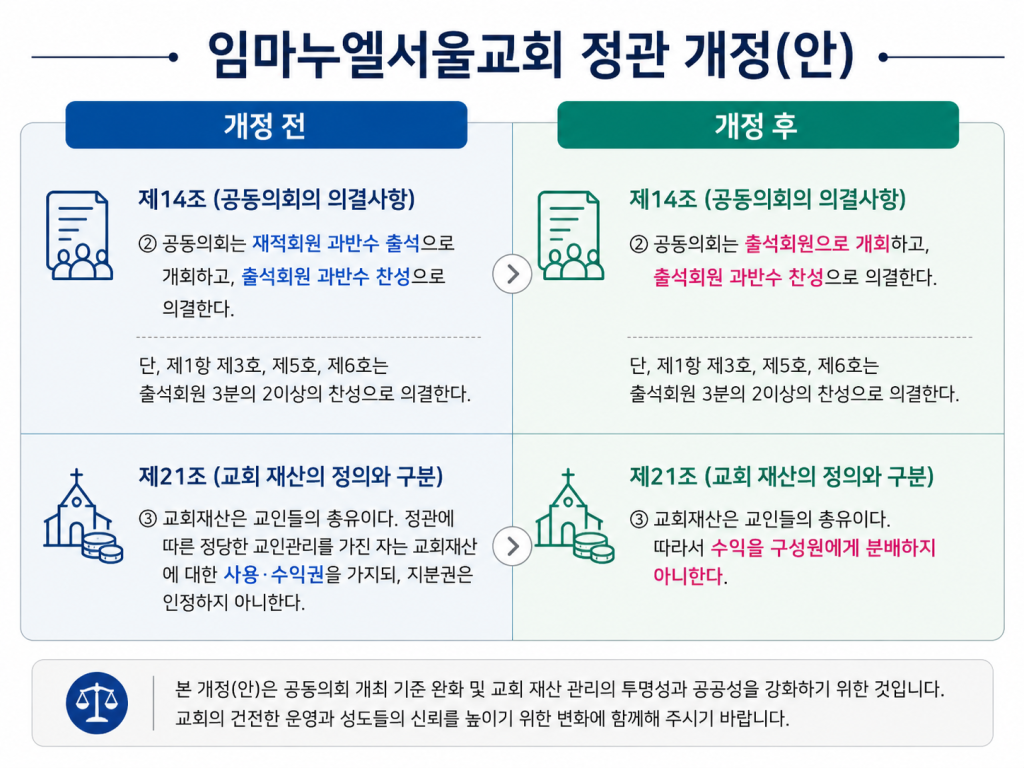
기존 정관은 공동의회를 재적회원 과반수 출석으로 개회하도록 규정하고 있었으나, 개정안은 출석회원으로 공동의회를 개회할 수 있도록 변경했다.
의결 방식은 기존과 동일하게 출석회원 과반수 찬성으로 유지된다.
제21조 교회 재산 관련 조항도 개정됐다.
기존 정관은 정관에 따른 정당한 교인권리를 가진 자가 교회 재산에 대한 사용·수익권을 가지되 지분권은 인정하지 않는다고 규정했다.
개정안은 해당 문구를 삭제하고 “교회 재산은 교인들의 총유이며, 수익을 구성원에게 분배하지 아니한다”고 명시했다.
교회 측은 공동의회 개최 시마다 재적회원 과반수 출석 여부를 확인해야 하는 현실적 어려움이 있었으며, 총회헌법 정치 제18장 회의 규정을 반영해 개정을 추진했다고 설명했다.
또한 정관 관련 민원이 접수된 이후 광주세무서로부터 정관 수정 필요 통보를 받아 제21조 개정을 진행했다고 밝혔다.
공동의회서 정관 개정안 의결
2026년 6월 21일 열린 공동의회에서는 제14조와 제21조 개정안을 대상으로 투표가 진행됐다.
교회 측이 공개한 개표 결과에 따르면 제1호 안건은 찬성 1,266명(74%), 반대 27명(2%), 기권 19명, 무효 388명으로 집계됐다.
제2호 안건은 찬성 1,387명(82%), 반대 28명(2%), 기권 19명, 무효 266명으로 집계됐다.
교회 측은 “과반수 이상의 찬성표로 개정안이 통과됐다”고 밝혔다.
왜 정관을 개정했나
교회 측 설명에 따르면 이번 개정은 공동의회 운영의 현실성을 높이고 교회 재산 관련 규정을 법적·행정적 기준에 맞게 정비하기 위한 목적에서 추진됐다.
특히 제14조 개정은 공동의회 개회 요건을 현실에 맞게 조정하는 데 초점이 맞춰졌으며, 제21조 개정은 교회의 비영리성과 재산 운영 원칙을 보다 명확히 하기 위한 취지에서 이뤄졌다.
정관 개정이 남긴 의미
이번 개정의 핵심은 제14조 공동의회 개회 기준 변경에 있다.
기존의 재적회원 과반수 출석 요건이 삭제되면서 향후 공동의회 소집과 의사결정 절차는 보다 유연하게 운영될 수 있게 됐다.
또한 제21조 개정을 통해 교회 재산의 비영리성과 운영 원칙을 정관에 보다 명확하게 반영했다는 점도 이번 개정의 특징이다.
이번 정관 개정은 공동의회 운영 방식과 재산 관련 규정을 정비한 것으로, 교회 운영의 효율성과 행정적 명확성을 높이기 위한 제도 개선의 의미를 담고 있다.
Immanuel Seoul Church Approves Bylaw Amendments at Congregational Meeting… Quorum Requirement Revised
Changes to Congregational Meeting Quorum and Church Property Clause Draw Attention to Governance Structure
Immanuel Seoul Church announced that it approved amendments to its church bylaws during a congregational meeting held on June 21, 2026.
According to the church, a total of 1,700 members participated in the vote through both online and offline channels, and both amendment proposals passed with a majority vote.
How Will the Congregational Meeting Quorum Change?
One of the most significant changes concerns Article 14, which governs resolutions of the congregational meeting.
Previously, the bylaws required the attendance of a majority of registered members in order to open a congregational meeting. Under the revised bylaws, the meeting may now be opened based on the members actually in attendance.
The voting requirement remains unchanged, with resolutions continuing to require approval by a majority of those present.
Article 21, concerning church property, was also revised.
The previous bylaw stated that members with legitimate church membership rights could exercise rights of use and benefit regarding church property, while ownership interests were not recognized.
The revised clause removes that language and instead states that “church property is collectively owned by the members, and any profits shall not be distributed to individual members.”
Church officials explained that the amendment to Article 14 was proposed in response to practical difficulties in verifying whether a majority of registered members were present whenever a congregational meeting was convened. They also noted that the revision reflects provisions found in the denomination’s constitutional regulations governing meetings.
Regarding Article 21, the church stated that the amendment was made after receiving notice from the Gwangju Tax Office requesting revisions to the church bylaws following a related civil complaint.
Congregational Meeting Approves Bylaw Amendments
During the congregational meeting held on June 21, 2026, members voted on the proposed revisions to Articles 14 and 21.
According to the official vote count released by the church, Proposal No. 1 received 1,266 votes in favor (74%), 27 votes against (2%), 19 abstentions, and 388 invalid ballots.
Proposal No. 2 received 1,387 votes in favor (82%), 28 votes against (2%), 19 abstentions, and 266 invalid ballots.
The church announced that both proposals were approved by a majority vote.
Why Were the Bylaws Revised?
According to church officials, the amendments were intended to improve the practical operation of congregational meetings and to align church property regulations with legal and administrative requirements.
The revision to Article 14 focused on adjusting meeting-opening requirements to better reflect operational realities, while the revision to Article 21 sought to clarify the church’s non-profit nature and principles regarding property management.
The Significance of the Amendments
The most notable aspect of the revisions is the change to the quorum requirement for opening congregational meetings under Article 14.
By removing the requirement that a majority of all registered members be present, future congregational meetings may be conducted with greater procedural flexibility.
The revision to Article 21 also provides clearer language regarding the church’s non-profit character and the management of church property.
Overall, the bylaw amendments represent an effort to streamline congregational meeting procedures and clarify property-related regulations, reflecting broader efforts to improve administrative efficiency and governance within the church.
저작권자 © '더미디어저널리스트' 무단전재 및 재배포, AI학습 및 활용 금지
작성자 소개