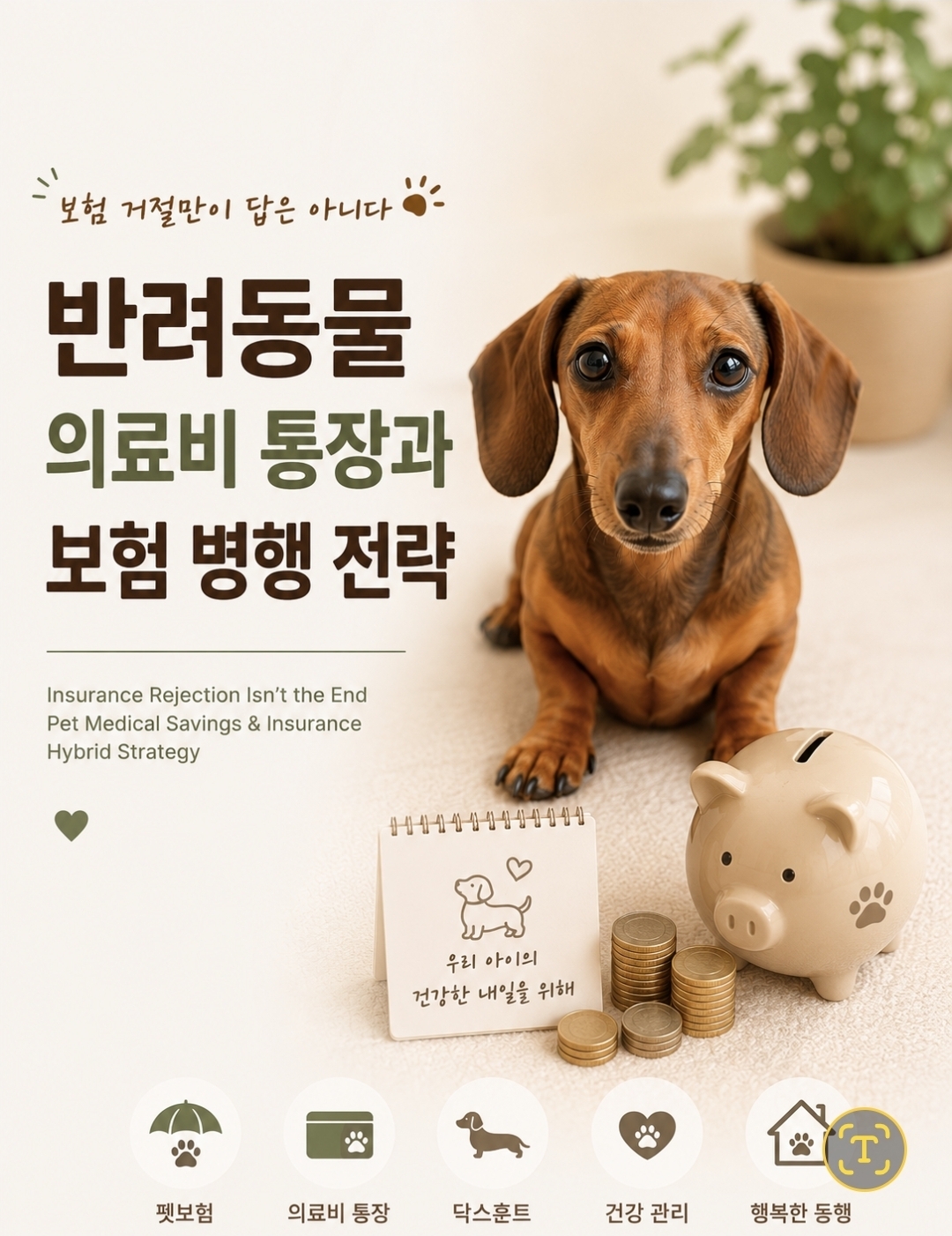
기존 질환 있는 반려견들, 펫보험 문턱 높아져
반려동물을 가족처럼 여기는 시대가 되면서 펫보험 가입에 대한 관심도 빠르게 커지고 있다. 그러나 현실에서는 모든 반려동물이 보험 가입 혜택을 누릴 수 있는 것은 아니다.
특히 유기견 출신 반려견이나 기존 질환 관리 이력이 있는 경우 보험 가입 자체가 거절되거나 특정 질환 부담보 판정을 받는 사례가 적지 않다.
최근 한 반려인은 닥스훈트 반려견의 보험 가입을 알아보던 과정에서 현실적인 고민에 부딪혔다. 해당 반려견은 외이도 관리와 방광 질환 병력, 결석 추적 관찰 이력이 있었고, 유기견 출신 특성상 정확한 출생연도 역시 명확하지 않은 상태였다.
보험사 심사 과정에서는 기존 병력과 나이, 지속 관리 기록 등이 복합적으로 고려됐고, 일부 보험사에서는 가입 거절 가능성이 언급됐다. 반려인은 “설령 가입이 되더라도 실제 자주 가는 질환은 부담보가 될 가능성이 높다는 이야기를 들었다”며 고민을 털어놓았다.
“보험료는 내는데 정작 보장은 제한적”
많은 반려인들이 펫보험에서 가장 현실적으로 고민하는 부분은 ‘실질적인 보장 범위’다.
예를 들어 귀 질환 부담보가 설정되면 반복적인 귀 세척이나 외이도 치료 비용은 보장에서 제외될 수 있다. 방광염이나 결석 관련 질환 역시 부담보가 설정될 경우 실제 병원 방문 빈도가 높은 항목들이 빠질 가능성이 존재한다.
문제는 이 과정에서도 보험료는 계속 납부된다는 점이다. 특히 반려견 나이가 많아질수록 보험료 부담은 높아질 수 있으며, 갱신 과정에서 조건이 달라질 가능성도 존재한다.
일부 반려인들 사이에서는 “몇 년 동안 보험료를 냈지만 실제 청구 가능한 항목은 많지 않았다”는 경험담도 나오고 있다.
반려인들 사이에서 떠오르는 ‘의료비 통장’
이 같은 현실 속에서 최근 반려인들 사이에서는 이른바 ‘반려동물 의료비 통장’ 방식이 현실적인 대안으로 주목받고 있다.
반려동물 의료비 통장은 보험 대신 매달 일정 금액을 별도 계좌에 적립해 병원비와 응급 상황에 대비하는 방식이다. 일종의 ‘반려동물 전용 비상금 통장’ 개념이다.
예를 들어 매달 10만 원씩 자동이체를 설정할 경우: 1년 약 120만 원, 3년 약 360만 원, 5년 약 600만 원 수준의 자금을 마련할 수 있다.
무엇보다 가장 큰 장점은 사용 제한이 없다는 점이다.
보험의 경우 약관과 부담보 여부를 따져야 하지만, 의료비 통장은 귀 질환, 방광 치료, 결석 검사, 치과 치료, MRI, 재활 치료 등 필요한 항목에 자유롭게 사용할 수 있다.
반려인들 사이에서는 “보험료를 내는 느낌으로 매달 모아두니 오히려 심리적으로 안정감이 생긴다”는 반응도 나온다.
“높은 이자보다 중요한 건 유동성”
최근에는 의료비 통장을 운영하는 방식에도 변화가 나타나고 있다.
과거처럼 장기 적금 형태보다는 파킹통장이나 CMA, 자유입출금 계좌를 활용하는 반려인들이 늘어나고 있는 것이다.
이유는 예상치 못한 병원비 때문이다.
반려동물 의료비는 갑작스럽게 발생하는 경우가 많다. 특히 닥스훈트처럼 디스크 위험이 있는 견종은 MRI 검사나 응급 수술이 갑자기 필요할 가능성도 존재한다.
이 경우 적금은 중도해지 과정에서 약정 금리가 사라질 수 있지만, 파킹통장이나 CMA는 자유롭게 입출금이 가능해 즉시 대응이 가능하다.
실제로 일부 반려인들은 “이자율 차이보다 중요한 것은 언제든 바로 사용할 수 있는 유동성”이라고 말한다.
보험과 의료비 통장 함께 운영하는 ‘병행 전략’도 확산
최근에는 보험과 의료비 통장을 함께 운영하는 이른바 ‘병행 전략’ 역시 현실적인 대안으로 주목받고 있다.
보험은 디스크 수술, MRI, 응급 입원, 큰 사고와 같은 고액 의료비 위험에 대비하고, 평소 반복적으로 발생하는 통원 치료나 관리 비용은 별도로 적립한 의료비 통장에서 해결하는 방식이다.
특히 기존 질환이 있는 반려견은 특정 부위 부담보가 설정될 가능성이 높은 만큼, 보험만으로 모든 병원비를 해결하기 어렵다는 인식이 커지고 있다.
실제 반려인들 사이에서는 “보험은 큰 사고 대비용, 의료비 통장은 생활 병원비용”이라는 인식도 점차 확산되는 분위기다.
예를 들어 귀 세척, 방광 관리, 결석 추적 검사와 같은 반복적이고 예측 가능한 비용은 의료비 통장에서 지출하고, 디스크 수술이나 응급 입원처럼 한 번에 수백만 원이 발생할 수 있는 상황은 보험으로 대비하는 방식이다.
반려인들은 이 같은 구조가 보험 하나에만 의존하는 방식보다 현실적이고 심리적인 안정감도 크다고 설명한다.
“반려동물 상황에 맞는 현실적 대비 필요”
전문가들은 반려동물의 건강 상태와 나이, 기존 병력에 따라 보험 효율이 크게 달라질 수 있다고 설명한다.
건강한 어린 반려동물은 보험 단독 운영만으로도 충분할 수 있지만, 이미 만성 관리 질환이 존재하거나 보험 가입 자체가 어려운 경우에는 별도 의료비 적립 방식이 현실적일 수 있다는 것이다.
또한 보험 가입 여부 자체보다 실제 보장 범위를 꼼꼼히 확인하는 것이 중요하다는 조언도 나온다.
반려동물 양육 비용 부담이 커지는 시대. 단순히 보험 가입 여부를 넘어, 자신의 반려동물 상황에 맞는 현실적인 의료비 대비 전략에 대한 관심도 함께 높아지고 있다.
[ENG]

Pet Insurance Becoming Harder for Pets With Pre-Existing Conditions
As companion animals increasingly become viewed as family members, interest in pet insurance continues to grow rapidly. In reality, however, not every pet can easily qualify for coverage.
In particular, rescue dogs or pets with ongoing medical histories are often denied coverage altogether or face exclusions for specific conditions.
Recently, one pet owner shared the difficulties they encountered while attempting to obtain insurance for a Dachshund. The dog had a history of chronic ear management, urinary issues, and ongoing monitoring for bladder stones. In addition, because the dog had originally been rescued, its exact birth year was unclear.
During the underwriting process, insurers reportedly considered the dog’s medical history, age-related uncertainty, and continued treatment records together. Some companies indicated the possibility of outright rejection. The owner explained, “Even if coverage was approved, I was told the conditions we visit the hospital for most often would likely be excluded.”
“Paying Premiums While Actual Coverage Remains Limited”
For many pet owners, the biggest concern surrounding pet insurance is the issue of practical coverage.
For example, if ear-related conditions are excluded, recurring ear cleanings and chronic otitis treatments may not be reimbursed. The same applies to urinary or bladder stone-related conditions if exclusions are attached to those areas.
The issue is that premiums must still be paid regardless of these limitations. As pets age, premiums may increase further, and renewal terms can become stricter over time.
Some pet owners have even shared experiences saying, “I paid insurance premiums for years, but there were very few expenses I could actually claim.”
The Rise of the “Pet Medical Expense Fund”
Amid these realities, an alternative approach known as a “pet medical expense fund” is gaining attention among pet owners.
Rather than relying entirely on insurance, owners deposit a fixed amount into a separate account each month to prepare for hospital bills and emergencies. In essence, it functions as a dedicated emergency fund for pets.
For example, depositing approximately 100,000 won per month could build:
- around 1.2 million won in one year,
- 3.6 million won in three years,
- and roughly 6 million won over five years.
One of the biggest advantages is flexibility.
Unlike insurance policies that require owners to navigate exclusions and reimbursement conditions, medical expense funds can be freely used for ear treatments, urinary care, stone monitoring, dental work, MRI scans, rehabilitation, and other necessary treatments.
Some pet owners say that “saving monthly as if paying insurance premiums actually creates greater psychological stability.”
“Liquidity Matters More Than High Interest Rates”
Recently, even the way these medical expense funds are managed has begun to change.
Instead of traditional long-term savings accounts, many owners now prefer flexible options such as high-yield checking accounts, parking accounts, or CMA accounts.
The reason is unpredictability.
Veterinary expenses often occur suddenly. In breeds like Dachshunds, which carry higher risks for spinal disc disease, emergency MRI scans or surgeries may become necessary without warning.
In such cases, fixed-term savings accounts may lose their promised interest rates if terminated early. Flexible accounts, however, allow immediate withdrawals without major penalties.
Many owners now argue that “liquidity matters more than slightly higher interest rates.”
Hybrid Strategies Combining Insurance and Medical Funds Also Growing
Another increasingly popular approach is the so-called “hybrid strategy,” which combines pet insurance with a separate medical expense fund.
Under this method, insurance is reserved for major emergencies such as spinal surgery, MRI scans, hospitalization, or severe accidents, while routine medical expenses are handled through the dedicated savings account.
For pets with existing medical conditions, exclusions on certain body systems are common, making it difficult to rely entirely on insurance alone.
Among pet owners, a growing perception is emerging: “Insurance is for catastrophic emergencies, while the medical expense fund covers daily veterinary care.”
For instance, recurring costs such as ear cleanings, urinary management, or stone follow-ups are paid from the medical fund, while large-scale emergencies involving hundreds or even thousands of dollars are handled through insurance.
Many owners describe this combined approach as both more practical and psychologically reassuring than depending solely on insurance.
“Realistic Preparation Matters More Than One Single Solution”
Experts explain that the effectiveness of pet insurance varies greatly depending on the animal’s age, health condition, and medical history.
Young and healthy pets may benefit significantly from standalone insurance coverage. However, for pets already dealing with chronic conditions or facing difficulties obtaining insurance, maintaining a separate medical savings strategy may prove more realistic.
Experts also emphasize that owners should carefully examine actual coverage details rather than focusing solely on whether insurance approval is possible.
As the financial burden of pet ownership continues to rise, more owners are shifting their focus beyond simply obtaining insurance — toward building realistic and sustainable medical expense strategies tailored to their pets’ individual situations.
저작권자 © '더미디어저널리스트' 무단전재 및 재배포, AI학습 및 활용 금지
작성자 소개