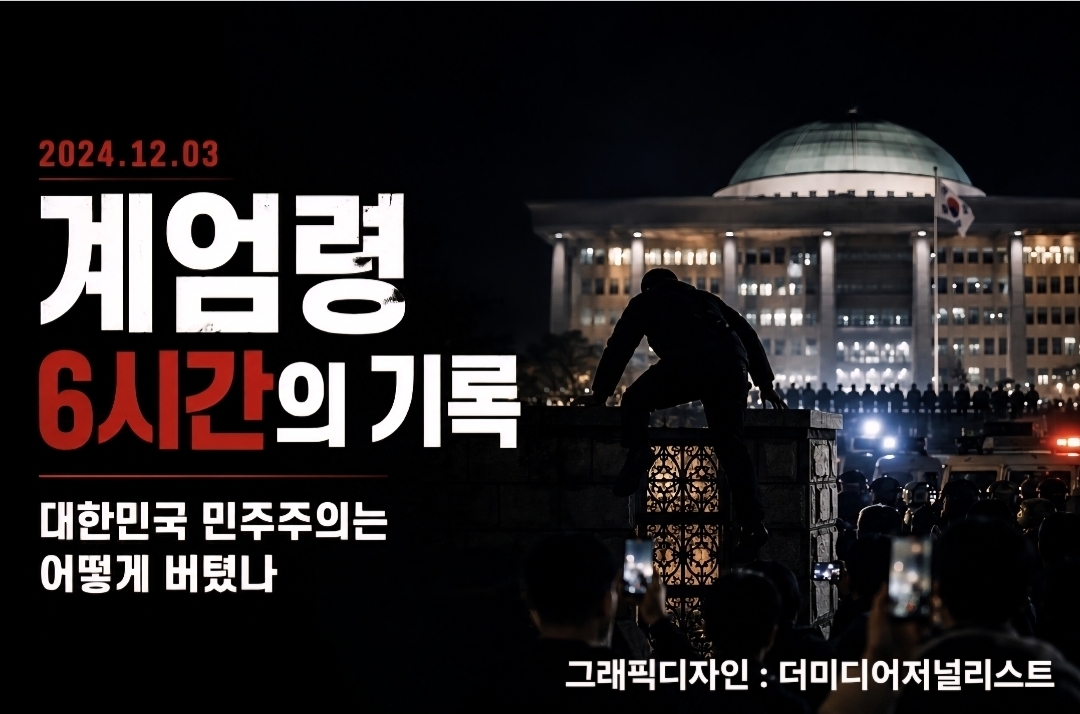
- 대통령 계엄 선포, 대한민국 충격
- 6시간 만에 계엄 해제
- 국회·시민·미디어가 동시에 움직였다
- 디지털 시대, 정보 통제는 불가능했다
- 세계는 한국 민주주의를 주목했다
- 민주주의는 제도보다 사람들에 의해 버텼다

프롤로그 — 믿기 어려운 장면
2024년 12월 3일 밤, 대부분의 사람들은 평범한 화요일 밤을 보내고 있었다.
그 시간, 대통령이 담화를 시작했다. 처음엔 많은 사람들이 화면을 제대로 보지 않았다. 대통령 긴급 담화는 이전에도 있었다. 하지만 “비상계엄을 선포합니다”라는 말이 나오는 순간, 수백만 명의 시선이 화면에 고정됐다.
SNS에는 즉각 반응이 올라왔다. “가짜뉴스 아니야?”, “설마 진짜야?”, “지금 몇 년도야?”
진짜였다.
1부 — 어떻게 가능했나
비상계엄은 대한민국 헌법이 대통령에게 부여한 권한이다. 헌법 제77조는 전시나 이에 준하는 국가 비상사태에서 대통령이 계엄을 선포할 수 있다고 명시한다. 제도적으로 불가능한 일은 아니었다.
윤석열 당시 대통령은 담화에서 야당의 반복적인 탄핵 추진과 예산 삭감, 국정 마비 등을 이유로 들었다. 그는 “자유민주주의를 지키기 위한 불가피한 선택”이라고 말했다.
하지만 계엄 선포 직후 발표된 포고령은 다른 그림을 그렸다. 정치활동 제한과 집회 금지, 언론 통제 조항이 담겼다. 이어 특전사를 포함한 군 병력이 국회의사당과 중앙선거관리위원회로 이동하기 시작했다.
제도적으로 가능한 일이었다. 그러나 그것이 옳은 일이었는지는 전혀 다른 질문이었다.
2부 — 왜 6시간 만에 끝났나
이것이 이 사건의 핵심 질문이다.
역사적으로 계엄은 한번 선포되면 쉽게 해제되지 않았다. 1980년 광주에서는 계엄군 투입 이후 대규모 유혈 사태가 발생했다. 정보는 차단됐고, 진실은 한참 뒤에야 알려졌다. 군사정권은 그렇게 오랜 시간 유지됐다.
그러나 2024년은 달랐다. 세 가지가 동시에 작동했다.
첫째, 국회가 빠르게 움직였다.
계엄 선포 직후 국회의원들은 국회로 향했다. 군이 국회 출입을 막자 일부 의원들은 담장을 넘었다. 보좌진과 시민들도 뒤를 따랐다. 새벽, 국회는 본회의를 열었다. 재적의원 과반이 출석했고, 비상계엄 해제 요구 결의안이 통과됐다. 헌법이 규정한 절차가 그대로 작동했다.
둘째, 군이 멈췄다.
현장 영상에는 군 병력이 시민들과 대치하면서도 직접 충돌을 피하는 모습이 담겼다. 국회 안으로 진입한 병력도 있었지만 의원들과 시민들을 물리력으로 제압하지는 않았다. 1980년과 가장 결정적으로 다른 장면이었다. 명령이 내려졌더라도 그것을 끝까지 실행하려는 의지가 현장 전체에서 강하게 나타나지는 않았다는 분석이 이어졌다.
셋째, 정보를 막을 수 없었다.
이것이 가장 근본적인 차이였다.
군 병력이 국회로 이동하는 순간부터 수십 개의 카메라가 그 장면을 찍었다. 유튜브 라이브가 켜졌고, SNS에는 영상이 올라왔다. 국회의원들은 담장을 넘으면서 직접 라이브 방송을 했다. 국회 앞에 모인 시민들은 휴대폰으로 현장을 촬영해 실시간으로 전국에 공유했다.
계엄은 정보를 독점할 수 있을 때 작동한다. 무슨 일이 벌어지고 있는지 사람들이 모를 때, 두려움은 저항보다 커진다. 그러나 2024년의 대한민국에서는 그 조건이 처음부터 성립하지 않았다. 계엄이 선포된 순간, 이미 수백만 명이 상황을 실시간으로 보고 있었다.
새벽 4시 30분, 정부는 계엄 해제를 발표했다. 선포부터 해제까지 6시간이었다.
3부 — 그날 밤 미디어는 무엇을 했나
KBS와 MBC, SBS는 즉각 뉴스특보 체제로 전환했다. 앵커들은 긴장된 표정으로 새벽까지 화면을 지켰다. 연합뉴스는 포고령 전문과 국회 상황을 속보로 전달했다.
조선일보와 중앙일보, 동아일보 등 보수 성향 주요 언론들도 계엄 선포와 군 병력 투입에 우려를 나타냈다. 한겨레와 경향신문은 보다 강한 표현으로 비판했고, 경향신문은 호외를 발행했다.
평소 첨예하게 갈리던 언론 논조가 이번 사건에서는 상당 부분 비슷한 방향으로 수렴했다는 점은 주목할 만하다.
그러나 그날 밤 정보의 흐름은 방송국 스튜디오 안에서만 만들어지지 않았다. 국회 앞 현장을 직접 촬영한 시민들, 라이브 방송을 켠 유튜버들, SNS에 영상을 올린 수많은 익명의 사람들이 동시에 움직였다.
레거시 미디어가 사건을 공식적으로 기록했다면, 뉴미디어는 그것을 막을 수 없는 속도로 확산시켰다.
1980년에는 광주에서 무슨 일이 벌어지는지 대부분의 국민이 알기 어려웠다. 그러나 2024년에는 서울 여의도에서 벌어지는 상황을 전 세계가 실시간으로 지켜봤다.
4부 — 세계는 어떻게 봤나
로이터와 CNN, BBC, 뉴욕타임스는 비상계엄 선포 직후 긴급 보도를 이어갔다. 블룸버그와 파이낸셜타임스는 한국 금융시장과 경제 불확실성 가능성을 분석했고, 일본 언론은 한미일 안보 공조에 미칠 영향을 주목했다.
일부 해외 분석에서는 “셀프 쿠데타(Self-coup)”라는 표현도 등장했다. 선출된 권력자가 스스로 헌정 질서를 무너뜨리려 했다는 의미다. 중남미와 동유럽의 민주주의 후퇴 사례들과 같은 맥락에서 분석하는 시각도 있었다.
그러나 동시에 외신 상당수는 다른 측면에도 주목했다. 국회가 새벽에 결의안을 통과시켰고, 군이 끝까지 강경하게 밀어붙이지 않았으며, 헌법 절차가 실제로 작동했다는 점이다.
그들은 이를 “한국 민주주의의 회복력”이라고 평가했다.
위기가 드러난 동시에, 그 위기를 버텨낸 힘 역시 드러났다.
5부 — 무엇이 남았나
계엄은 6시간 만에 끝났지만, 그것이 남긴 질문들은 훨씬 오래 남게 됐다.
대통령 권한의 범위는 어디까지인가. 계엄법은 지금 이대로 괜찮은가. 극단적 정치 대립이 반복된다면 비슷한 상황이 다시 발생하지 않으리라고 장담할 수 있는가.
사회적으로는 이미 심각했던 정치 양극화가 이 사건을 계기로 더욱 깊어졌다는 평가도 나온다. 같은 사건을 두고 “헌법 수호를 위한 조치였다”는 해석과 “민주주의 훼손 시도였다”는 해석이 공존한다. 사실관계 자체보다 사건의 의미를 둘러싼 해석 차이가 더 커졌다는 분석도 있다.
그러나 이번 사건이 보여준 것도 있었다.
민주주의는 제도만으로 유지되지 않는다. 헌법 조문이 존재하더라도 그것을 지키려는 사람들이 없다면 종이 위의 문장에 머물 수 있다. 담장을 넘은 국회의원들, 새벽에 국회 앞으로 모인 시민들, 카메라를 켠 수많은 사람들 — 그들이 그날 밤 민주주의의 실질적인 방어선이었다.
결국 그날 밤 민주주의를 지탱한 것은 제도와 현장에 있었던 사람들의 움직임이었다.
에필로그
그날 밤을 기억하는 사람들은 대부분 비슷한 말을 한다. “현실감이 없었다”고.
2024년에 계엄령이라는 단어를 듣게 될 줄 몰랐다고. 교과서 속 이야기인 줄 알았다고.
그러나 그것은 현실이었다. 그리고 그 현실 속에서 대한민국은, 아슬아슬하게 버텼다.
민주주의가 얼마나 단단한지는 위기가 없을 때는 알 수 없다. 12월 3일 밤은 그것을 시험한 밤이었다. 그리고 그 시험이 완전히 끝났는지는, 아직 아무도 모른다.
이 기사는 12·3 비상계엄 사태와 관련한 국내외 보도, 정치권 반응, 시민사회 및 미디어 환경 변화를 종합적으로 분석한 기획 기사입니다.
Six Hours Under Martial Law — How South Korean Democracy Endured on December 3, 2024
By Bang Chaeyoung
Prologue — A Scene Hard to Believe
On the night of December 3, 2024, most people in South Korea were spending an ordinary Tuesday evening.
Then the president began a televised address. At first, many people did not pay close attention. Presidential emergency statements had happened before. But the moment the words “I hereby declare martial law” were spoken, millions of eyes froze on their screens.
Social media reacted instantly.
“Is this fake news?”
“No way this is real.”
“What year are we living in?”
But it was real.
Part 1 — How Was It Possible?
Martial law is a constitutional power granted to the president of South Korea. Article 77 of the Constitution states that the president may declare martial law in times of war or national emergency. Legally, it was not impossible.
In his address, then-President Yoon Suk Yeol cited repeated impeachment attempts by the opposition, budget cuts, and political paralysis as reasons for the declaration. He described it as “an unavoidable choice to protect liberal democracy.”
But the proclamation issued immediately afterward painted a different picture. It included restrictions on political activity, bans on assemblies, and provisions related to media control. Soon after, military units — including special forces — began moving toward the National Assembly and the National Election Commission.
It may have been constitutionally possible. But whether it was justified was an entirely different question.
Part 2 — Why Did It End in Just Six Hours?
This is the central question of the entire event.
Historically, once martial law was declared in South Korea, it did not end easily. In Gwangju in 1980, military intervention led to large-scale bloodshed. Information was blocked, and the truth emerged only much later. Military rule lasted for decades.
But 2024 was different. Three things operated simultaneously.
First, the National Assembly moved quickly.
Immediately after the declaration, lawmakers rushed toward the National Assembly. When military personnel blocked access, some lawmakers climbed over the walls. Staff members and citizens followed behind them.
By dawn, the Assembly had convened an emergency session. More than half of the lawmakers were present, and a resolution demanding the lifting of martial law was passed. Constitutional procedures functioned exactly as written.
Second, the military stopped short.
Videos from the scene showed soldiers facing civilians while avoiding direct confrontation. Troops entered parts of the National Assembly compound, but they did not physically suppress lawmakers or citizens.
It was perhaps the most striking contrast with 1980. Even if orders had been issued, there appeared to be no unified willingness on the ground to carry them through to the end.
Third, information could not be controlled.
This was the most fundamental difference.
From the moment military vehicles began moving toward the National Assembly, dozens of cameras captured the scene. YouTube livestreams began immediately. Videos spread across social media platforms. Lawmakers broadcast themselves climbing over walls. Citizens outside the Assembly filmed events on their phones and shared them nationwide in real time.
Martial law functions when information can be monopolized. When people do not know what is happening, fear becomes stronger than resistance.
But in South Korea in 2024, that condition never existed. The moment martial law was declared, millions were already watching live.
At 4:30 a.m., the government announced the lifting of martial law.
From declaration to cancellation, it lasted six hours.
Part 3 — What Did the Media Do That Night?
KBS, MBC, and SBS immediately switched to breaking-news coverage. Anchors remained on air throughout the night with visibly tense expressions. Yonhap News Agency distributed the full text of the martial law proclamation and live updates from the National Assembly.
Major conservative newspapers such as Chosun Ilbo, JoongAng Ilbo, and Dong-A Ilbo expressed concern over the declaration and the deployment of troops. Progressive outlets including Hankyoreh and Kyunghyang Shinmun used stronger language in criticism, with Kyunghyang even publishing an emergency extra edition.
It was notable that media outlets with sharply different political leanings pointed in largely the same direction on this issue.
Yet the flow of information that night was not created only inside television studios. Citizens filming outside the National Assembly, YouTubers livestreaming events, and countless anonymous users posting videos online all moved simultaneously.
If legacy media officially documented the event, new media spread it at a speed that could no longer be contained.
In 1980, most South Koreans struggled to learn what was happening in Gwangju. In 2024, the world watched events unfold in Yeouido in real time.
Part 4 — How Did the World React?
Reuters, CNN, BBC, and The New York Times issued breaking coverage almost immediately after the declaration of martial law. Bloomberg and the Financial Times analyzed the potential impact on South Korea’s financial markets and economic stability, while Japanese media focused on implications for trilateral security cooperation among South Korea, the United States, and Japan.
Some international analyses used the phrase “self-coup,” referring to an elected leader attempting to undermine the constitutional system from within. Comparisons were drawn to democratic backsliding cases in Latin America and Eastern Europe.
At the same time, however, many foreign observers focused on another aspect of the story. The National Assembly passed a resolution before dawn. The military did not fully escalate. Constitutional procedures continued to function.
Many described this as evidence of “the resilience of South Korean democracy.”
The crisis exposed vulnerabilities, but it also revealed the strength that resisted them.
Part 5 — What Remains?
Martial law ended in six hours, but the questions it left behind may remain for much longer.
How far should presidential emergency powers extend? Is South Korea’s martial law system still appropriate in its current form? If extreme political polarization continues, can anyone confidently say such a situation could never happen again?
Socially, many argue that the already severe political divide in South Korea deepened even further after the incident. Some interpret the event as an attempt to defend constitutional order, while others view it as an attempt to undermine democracy itself.
The disagreement is no longer simply about facts, but about meaning.
Yet the event also revealed something important.
Democracy does not survive through institutions alone. Constitutional provisions mean little if there are no people willing to defend them. The lawmakers who climbed the walls, the citizens who gathered outside the Assembly at dawn, and the countless people who turned on their cameras — they became the real defensive line of democracy that night.
Ultimately, what sustained South Korean democracy that night was not only institutions, but the actions of people on the ground.
Epilogue
People who remember that night often say the same thing:
“It didn’t feel real.”
They never imagined hearing the words “martial law” again in 2024. Many believed such things existed only in history textbooks.
But it was real.
And in that reality, South Korea endured — barely.
You cannot know how strong a democracy truly is until it faces a real crisis. The night of December 3 tested that strength.
And whether that test is truly over, nobody yet knows.
This article is a special feature analyzing the December 3 martial law crisis through domestic and international media coverage, political responses, civil society reactions, and changes in the digital media environment.
저작권자 © '더미디어저널리스트' 무단전재 및 재배포, AI학습 및 활용 금지
작성자 소개