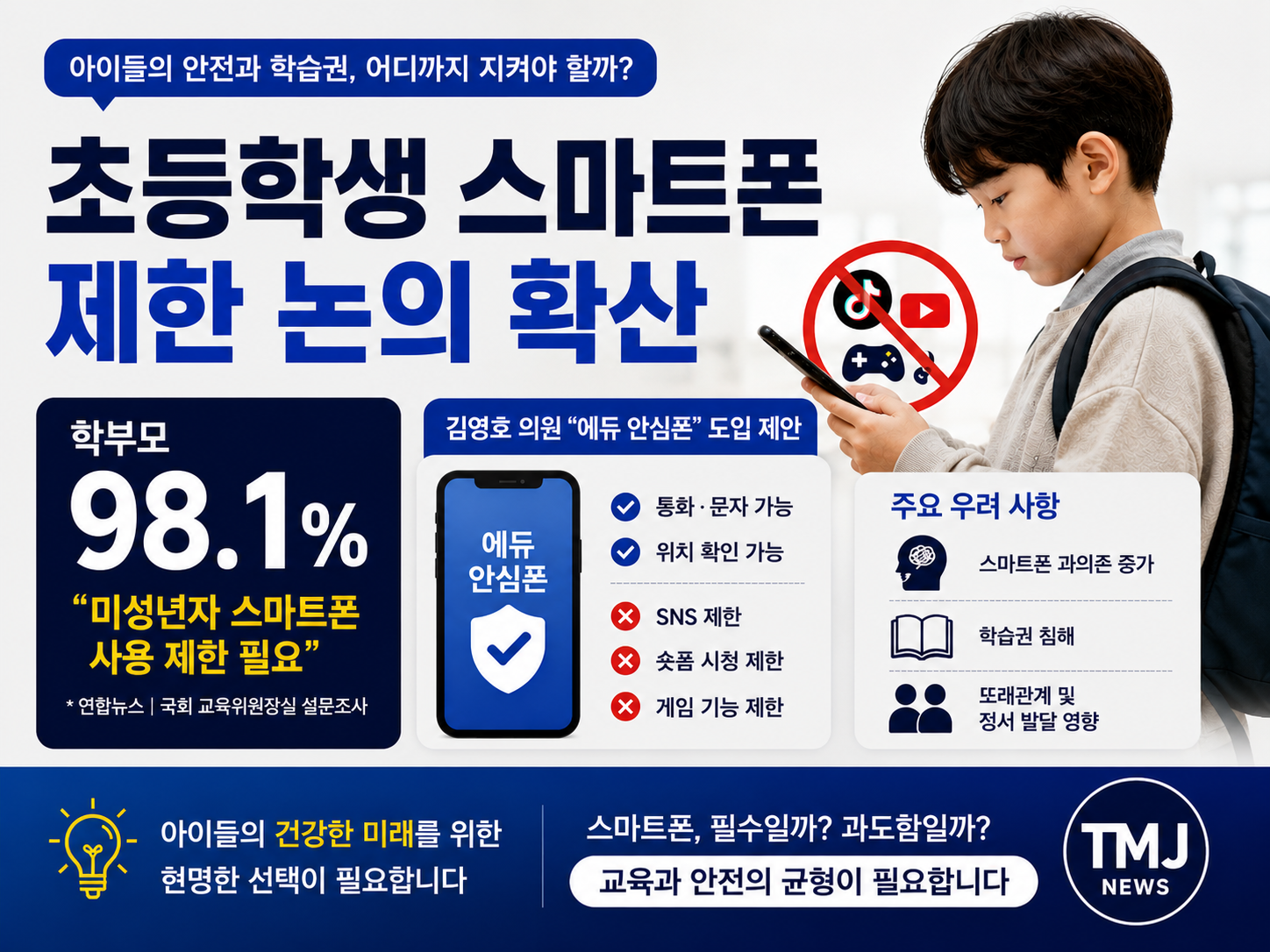
초등학생 스마트폰 제한 논의와 에듀 안심폰 도입 방안을 정리한 인포그래픽.
초등학생을 포함한 미성년자의 스마트폰 사용을 어떻게 관리할 것인가를 둘러싼 사회적 논의가 다시 주목받고 있다. 디지털 기기가 일상이 된 시대에 스마트폰의 편리함과 과의존 문제를 어떻게 균형 있게 다룰 것인지가 교육계의 새로운 과제로 떠오르고 있다.
연합뉴스에 따르면, 김영호 국회 교육위원장은 최근 서울·인천·경남 지역 초·중·고교 학부모 5만2천여 명을 대상으로 실시한 설문조사 결과를 공개했다. 조사에서는 응답자의 98.1%가 미성년자의 스마트폰 사용에 일정한 제한이 필요하다고 답한 것으로 나타났다.
학부모들은 유해 콘텐츠 노출, SNS와 숏폼 콘텐츠 이용 증가, 학습 집중력 저하, 스마트폰 사용시간 조절의 어려움 등을 주요 우려 요인으로 꼽았다. 스마트폰이 단순한 통신수단을 넘어 학생들의 생활습관과 학습환경에 영향을 미치고 있다는 인식이 반영된 결과로 풀이된다.
김 위원장은 이 같은 조사 결과를 바탕으로 학생용 제한형 스마트기기인 ‘에듀 안심폰’ 도입 필요성을 제시했다. 에듀 안심폰은 통화와 문자, 위치 확인 등 안전에 필요한 기능은 유지하면서도 SNS, 숏폼 영상, 게임 등 과도한 이용이 우려되는 기능은 제한하는 방안을 핵심으로 한다.
김 위원장은 “학부모들이 스마트폰의 위험성을 충분히 인식하고 있지만, 자녀의 안전과 학교생활을 위해 스마트폰을 사용할 수밖에 없는 현실이 조사 결과에 반영됐다”며 학생들의 디지털 과의존을 줄일 수 있는 현실적인 대안 마련이 필요하다고 밝혔다.
이번 논의는 스마트폰을 전면 금지하자는 취지보다 학생들의 안전과 학습권을 보호하면서도 디지털 환경에 적절히 적응할 수 있는 기준을 마련하는 데 초점이 맞춰져 있다.
학생들의 스마트폰 사용을 둘러싼 논의는 앞으로 교육계와 학부모, 전문가들의 의견을 거쳐 더욱 구체화될 전망이다. 기술의 발전 속도만큼 중요한 것은 아이들이 디지털 환경을 건강하게 활용할 수 있도록 사회적 기준과 교육적 해법을 함께 마련하는 일이라는 지적도 나온다.
Debate Grows Over Smartphone Restrictions for Elementary Students… 98.1% of Parents Support Limits on Minors’ Smartphone Use
Public debate is once again intensifying over how smartphone use among minors, including elementary school students, should be managed. As digital devices have become an integral part of everyday life, balancing the convenience of smartphones with concerns about overdependence has emerged as a new challenge for the education sector.
According to Yonhap News Agency, Kim Young-ho, Chair of the National Assembly’s Education Committee, recently released the results of a survey conducted among approximately 52,000 parents of elementary, middle, and high school students in Seoul, Incheon, and South Gyeongsang Province. The survey found that 98.1% of respondents believe that some level of restriction on smartphone use by minors is necessary.
Parents cited exposure to harmful online content, increased use of social media and short-form videos, reduced concentration in learning, and difficulties in controlling screen time as their primary concerns. The findings suggest that smartphones are no longer viewed merely as communication devices but as tools that significantly influence students’ daily habits and learning environments.
Based on the survey results, Kim proposed introducing a restricted smartphone designed specifically for students, tentatively called the “Edu Safe Phone.” The concept would preserve essential functions such as voice calls, text messaging, and location tracking while limiting access to social media platforms, short-form video services, mobile games, and other features considered highly addictive.
Kim stated that the survey reflects the reality that although parents recognize the risks associated with smartphones, they often feel compelled to provide them for their children’s safety and school life. He emphasized the need for practical measures to reduce digital overdependence among students.
The proposal is not intended to impose a complete ban on smartphone use. Instead, it seeks to establish reasonable guidelines that protect students’ safety and learning while allowing them to adapt responsibly to the digital environment.
Discussions on smartphone use among students are expected to continue among educators, parents, and experts as policymakers consider whether and how to introduce restricted smartphones for students.
제보하기: press@media-journalist.com
저작권자 © '더미디어저널리스트' 무단전재 및 재배포, AI학습 및 활용 금지
작성자 소개