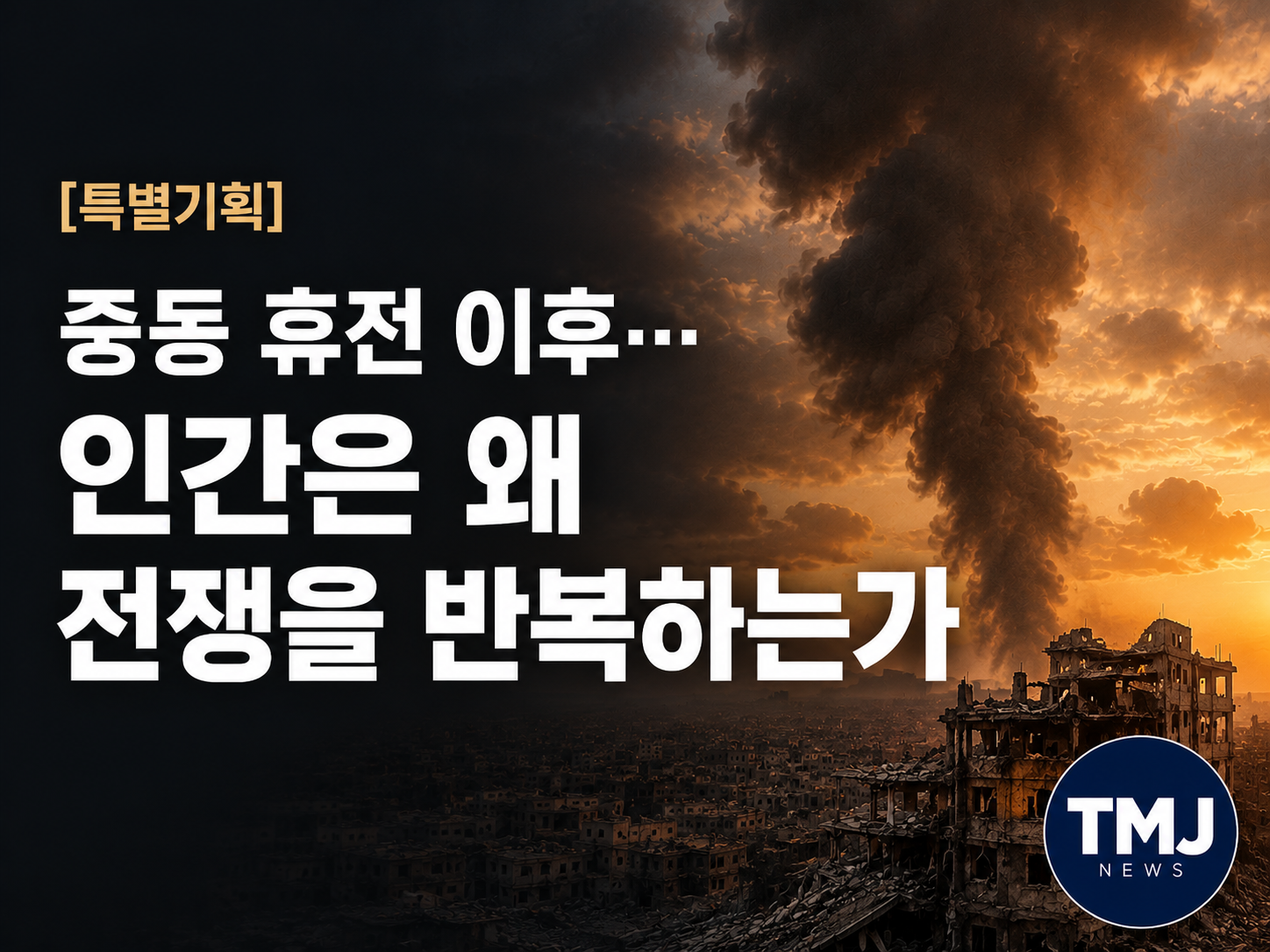
우리는 달에 갔지만 왜 평화에는 도착하지 못했나
휴전이 선언됐다. 그러나 국제사회는 안도하지 못했다. 국제유가는 여전히 변동성을 보였고, 각국 정부와 금융시장은 중동 정세를 예의주시하고 있다. 군사적 충돌은 일단 멈췄지만 지정학적 리스크는 해소되지 않았기 때문이다.
이번 중동 충돌은 단순한 지역 분쟁이 아니다. 이란과 이스라엘의 대립은 핵 개발 문제, 역내 패권 경쟁, 종교적 갈등, 에너지 안보가 복합적으로 얽혀 있는 구조적 충돌이다. 휴전은 총성을 멈추게 할 수는 있지만 갈등의 원인까지 제거하지는 못한다.
휴전은 됐지만 평화는 오지 않았다
국제정치학에서 휴전(Ceasefire)과 평화(Peace)는 전혀 다른 개념이다. 휴전은 무력 충돌을 일시적으로 중단하는 정치적 합의에 가깝지만, 평화는 갈등의 원인이 해소된 상태를 의미한다.
현재 중동 상황은 후자와 거리가 멀다. 이란의 핵 개발 의혹은 여전히 진행 중이며, 이스라엘은 이를 국가 생존을 위협하는 안보 문제로 인식하고 있다. 미국과 이란의 전략적 대립 또한 근본적으로 해소되지 않았다.
국제사회가 휴전 이후에도 긴장을 늦추지 못하는 이유가 여기에 있다. 전쟁은 멈췄지만 전쟁의 조건은 여전히 존재하기 때문이다.
더욱이 중동은 세계 에너지 공급망의 핵심 지역이다. 미국 에너지정보청(EIA)에 따르면 하루 약 2천만 배럴 안팎의 원유와 석유제품이 호르무즈 해협을 통과한다. 이는 전 세계 원유 해상 교역량의 약 20~25% 수준으로 평가된다.
휴전 소식에도 시장이 긴장을 늦추지 못한 이유는 단순하다. 전쟁이 다시 시작될 경우 에너지 공급망 전체가 흔들릴 수 있기 때문이다.
중동은 왜 늘 전쟁의 중심이 되는가
중동은 세계에서 가장 복잡한 지정학적 공간 가운데 하나다.
우선 세계 최대 규모의 에너지 자원이 집중돼 있다. 석유와 천연가스는 현대 산업사회의 핵심 자원이며, 에너지 공급망의 안정성은 곧 국가 경쟁력과 직결된다.
또한 중동은 유럽·아시아·아프리카를 연결하는 전략적 요충지다. 특히 호르무즈 해협은 글로벌 에너지 수송의 핵심 통로로 평가된다. 이 해협이 봉쇄될 경우 국제유가 급등과 물류비 상승, 공급망 교란이 동시에 발생할 수 있다.
여기에 종교적 정체성과 민족 문제, 강대국 간 영향력 경쟁까지 더해지면서 중동은 늘 국제정치의 화약고로 불려 왔다.
흥미로운 점은 이 지역이 단순한 분쟁 지역이 아니라 인류 문명과 종교의 발상지라는 사실이다.
오늘날 이란은 고대 페르시아 제국의 역사적 계승 국가로 평가된다. 고레스 왕은 바벨론 포로 생활을 마친 유대인들의 귀환을 허용한 통치자로 기록돼 있다.
이스라엘 역시 유대교와 기독교 역사에서 중요한 위치를 차지한다. 인류 문명사와 종교사의 주요 장면들이 이 지역을 중심으로 펼쳐졌다.
아이러니하게도 인류 문명의 뿌리이자 세계 주요 종교의 발상지인 이 지역은 수천 년이 지난 오늘날에도 갈등의 중심에 서 있다.
어쩌면 오늘의 중동은 새로운 전쟁의 현장이 아니라 인류가 아직도 풀지 못한 오래된 질문이 계속 이어지고 있는 공간인지 모른다.
숫자로 본 전쟁의 파장
이번 충돌은 국제 금융시장과 에너지 시장에도 즉각적인 영향을 미쳤다.
전쟁 우려가 고조되면서 국제유가는 큰 폭의 변동성을 보였다. 이후 휴전 가능성이 제기되면서 진정되는 모습을 보였지만, 중동 정세에 따라 다시 상승 압력을 받았다.
이는 현대 전쟁이 더 이상 전장 안에만 머무르지 않는다는 사실을 보여준다.
과거 전쟁이 영토를 둘러싼 충돌이었다면 오늘날의 전쟁은 에너지와 금융, 물류와 공급망을 동시에 흔든다.
전쟁은 더 이상 국경 안에서 끝나지 않는다. 미사일은 중동에서 발사되지만 그 충격은 에너지 가격과 금융시장, 공급망을 따라 전 세계로 확산된다.
세계 경제가 중동 정세에 민감하게 반응하는 이유도 여기에 있다. 한국은 원유 수입의 60~70% 이상을 중동 지역에 의존하고 있어 중동발 리스크에 상대적으로 민감한 구조를 갖고 있다.
오늘날 전쟁은 군인들만의 문제가 아니다. 기업과 소비자, 가계 경제까지 영향을 미치는 글로벌 경제 사건이다.
서울의 주유소 가격과 생활물가가 중동의 미사일과 연결되는 시대다.
우리는 달에 갔지만 평화에는 도착하지 못했다
2025년과 2026년 중동을 둘러싼 긴장 고조는 현대 문명의 역설을 보여준다.
이스라엘은 세계 최고 수준의 미사일 방어체계와 정보력을 보유하고 있다. 이란 역시 중동 최대 규모의 미사일 전력과 드론 전력을 갖추고 있다. 양측 모두 과거 어느 시대보다 정교한 군사기술을 보유하고 있다.
그러나 기술의 발전이 평화를 보장하지는 못했다.
스톡홀름국제평화연구소(SIPRI)에 따르면 2024년 전 세계 군사비 지출은 약 2조7천억 달러로 역대 최고치를 기록했다. 냉전 종식 이후에도 군사비는 꾸준히 증가해 왔으며 최근에는 우크라이나 전쟁과 중동 갈등, 미중 전략경쟁이 맞물리면서 증가 속도가 더욱 빨라지고 있다.
인류는 평화를 이야기하지만 동시에 더 많은 무기를 생산하고 더 많은 군사력을 확보하는 데 막대한 자원을 투입하고 있다.
오히려 인공지능과 드론, 정밀유도무기는 전쟁을 더욱 효율적으로 만들었다. 사람들은 실시간으로 전쟁 영상을 시청하고 알고리즘은 전장의 정보를 분석한다. 하지만 갈등의 본질은 달라지지 않았다.
인류는 달에 착륙했고 화성 탐사를 준비하고 있다. 인공지능은 인간의 언어를 이해하기 시작했고 의학은 인간의 수명을 연장하고 있다.
그럼에도 불구하고 전쟁은 반복된다.
기술은 발전했지만 신뢰는 함께 성장하지 못했다. 군사력은 강해졌지만 두려움은 사라지지 않았다.
현대 문명이 직면한 가장 큰 역설은 바로 여기에 있다.
전쟁은 기술의 문제가 아니라 인간의 문제다
국제정치학은 전쟁의 원인 가운데 하나로 안보 딜레마(Security Dilemma)를 설명한다.
한 국가가 자국의 안보를 강화하기 위해 군사력을 증강하면 상대국은 이를 위협으로 받아들인다. 상대국 역시 군비를 확대하고 결국 양측 모두 더 불안해지는 역설이 발생한다.
현재 중동 정세도 이와 크게 다르지 않다.
이스라엘은 이란의 핵 개발 가능성을 국가 생존의 위협으로 인식한다. 반대로 이란은 이스라엘과 미국의 군사적 압박을 체제 생존에 대한 위협으로 받아들인다.
양측 모두 스스로를 방어한다고 주장하지만 결과적으로는 군비 경쟁과 긴장 고조로 이어진다.
전쟁은 종종 공격 의지보다 두려움에서 시작된다.
역사학은 권력과 패권 경쟁을 이야기하고 경제학은 자원과 이해관계를 설명한다. 그러나 모든 설명의 끝에는 결국 인간이 남는다.
전쟁은 무기가 일으키는 것이 아니다. 무기를 사용하는 인간이 일으킨다.
전쟁은 어디에서 시작되는가
대부분의 전쟁은 국경선 위에서 갑자기 시작되지 않는다.
상대에 대한 불신이 누적되고 안보 위협에 대한 공포가 커지며 자신의 이익을 지키려는 욕망이 확대될 때 갈등은 점차 군사적 충돌로 발전한다.
국가도 인간이 만든 공동체다.
따라서 국가 간 전쟁 역시 인간이 가진 두려움과 욕망, 불신과 경쟁이 확대된 결과로 볼 수 있다.
오늘의 중동은 현대 국제사회가 직면한 구조적 갈등의 축소판이다.
휴전은 끝이 아니라 질문의 시작이다
중동 전쟁은 멀리 떨어진 국제뉴스처럼 보인다. 그러나 그것은 인류가 수천 년 동안 반복해 온 질문을 다시 던진다.
왜 인간은 평화를 원하면서도 전쟁을 반복하는가.
휴전은 총성을 멈추게 할 수는 있다. 그러나 인간의 두려움과 욕망까지 멈추게 하지는 못한다.
오늘날 국제사회는 군사적 억지력(Deterrence)과 외교적 협상을 통해 전쟁을 관리하고 있다. 그러나 진정한 평화는 단순히 전쟁이 없는 상태를 넘어 상호 신뢰와 공존의 질서가 구축될 때 가능하다.
중동의 휴전은 끝이 아니다. 오히려 인간과 문명, 그리고 평화의 의미를 다시 묻는 새로운 출발점일지 모른다.
결국 전쟁이 우리에게 던지는 가장 중요한 질문은 누가 승리했는가가 아니다.
어떻게 공존할 것인가, 무엇이 사람을 살리는가에 대한 질문이다.
우리는 달에 갔고 인공지능을 만들었다. 그러나 여전히 전쟁을 끝내지 못하고 있다.
그렇다면 인류가 아직 배우지 못한 것은 무엇일까.
<편집자 노트>
중동의 휴전은 끝이 아니라 질문의 시작일지 모릅니다.
더미디어저널리스트는 이번 특별기획을 통해 전쟁의 승패보다 인간과 문명, 그리고 평화의 본질을 함께 살펴보고자 했습니다.
이 기획은 단순히 중동 전쟁을 설명하는 데 목적이 있지 않습니다. 전쟁을 통해 인간을 들여다보고, 인간을 통해 오늘의 시대를 이해하려는 시도입니다.
앞으로도 더미디어저널리스트는 사건의 사실을 넘어 그 사건이 우리 사회와 인간에게 무엇을 말하는지 질문하겠습니다.
※ 특별기획 「전쟁은 우리에게 무엇을 말하는가」는 계속됩니다.
다음 편 예고
② 전쟁은 끝나도 상처는 남는다
전쟁이 남긴 트라우마와 난민, 세대 간 상처는 어떻게 이어지는가.
③ 무엇이 사람을 살리는가
갈등과 분열의 시대, 인간과 공동체를 지키는 힘은 어디에서 오는가.
방채영 편집장
사건의 본질을 묻고, 시대의 맥락을 읽습니다.
[Special Report] After the Middle East Ceasefire: Why Does Humanity Keep Repeating War?
We Reached the Moon, but Why Haven’t We Reached Peace?
A ceasefire has been declared. Yet the international community remains uneasy. Global oil prices continue to fluctuate, while governments and financial markets closely monitor developments in the Middle East. Although military clashes have temporarily stopped, geopolitical risks remain unresolved.
The recent conflict in the Middle East is far more than a regional dispute. The confrontation between Iran and Israel is a structural conflict shaped by intertwined issues such as nuclear development, regional power competition, religious tensions, and energy security. A ceasefire may silence the guns, but it does not remove the causes of conflict.
The Fighting Has Stopped, but Peace Has Not Arrived
In international relations, a ceasefire and peace are fundamentally different concepts.
A ceasefire is a political agreement that temporarily halts armed conflict. Peace, however, exists only when the underlying causes of conflict have been addressed.
The current situation in the Middle East remains far from genuine peace. Questions surrounding Iran’s nuclear ambitions persist, while Israel continues to view them as a direct threat to national survival. Likewise, the strategic rivalry between the United States and Iran remains unresolved.
This is why the world cannot relax even after the ceasefire. The war may have stopped, but the conditions that make war possible still exist.
The Middle East also remains the heart of the global energy supply chain. According to the U.S. Energy Information Administration (EIA), roughly 20 million barrels of crude oil and petroleum products pass through the Strait of Hormuz every day, accounting for approximately 20–25 percent of global seaborne oil trade.
The reason markets remain cautious despite the ceasefire is simple: if hostilities resume, the entire global energy system could be disrupted.
Why Is the Middle East Always at the Center of Conflict?
The Middle East is one of the most complex geopolitical regions in the world.
First, it contains some of the largest energy reserves on the planet. Oil and natural gas remain essential resources for modern industrial societies, and energy security is directly linked to national competitiveness.
Second, the region serves as a strategic crossroads connecting Europe, Asia, and Africa. The Strait of Hormuz in particular is one of the world’s most important energy transit routes. Any disruption there could trigger surging oil prices, higher logistics costs, and severe supply-chain disruptions.
Religious identities, ethnic divisions, and competition among major powers further complicate the region, earning it the reputation of a geopolitical powder keg.
Ironically, the Middle East is not only a region of conflict but also the birthplace of human civilization and major world religions.
Modern Iran is often viewed as the successor to the ancient Persian Empire. King Cyrus is remembered in history as the ruler who allowed Jewish exiles in Babylon to return to their homeland.
Israel likewise occupies a central place in Jewish and Christian history. Many of the defining moments of human civilization and religious tradition unfolded in this region.
Paradoxically, the cradle of civilization and faith remains a center of conflict thousands of years later.
Perhaps today’s Middle East is not merely a battlefield but a place where humanity continues to wrestle with questions it has never fully answered.
The Economic Cost of War in Numbers
The recent conflict immediately affected global financial and energy markets.
As fears of war intensified, oil prices experienced significant volatility. While speculation about a ceasefire helped calm markets temporarily, renewed tensions continue to exert upward pressure on prices.
This illustrates an important reality: modern wars no longer remain confined to the battlefield.
Where past wars were often fought over territory, contemporary conflicts simultaneously affect energy markets, finance, logistics, and global supply chains.
War no longer ends at national borders. Missiles may be launched in the Middle East, but their consequences spread worldwide through energy prices, financial markets, and trade networks.
South Korea is particularly vulnerable because more than 60 percent of its crude oil imports originate from the Middle East.
In today’s interconnected world, war is no longer just a military issue. It is a global economic event affecting businesses, consumers, and household budgets alike.
The price of fuel at a gas station in Seoul can be linked directly to missiles launched thousands of miles away.
We Reached the Moon, but Not Peace
The tensions surrounding the Middle East in 2025 and 2026 reveal a profound paradox of modern civilization.
Israel possesses some of the world’s most advanced missile-defense systems and intelligence capabilities. Iran maintains one of the region’s largest missile and drone forces. Both sides wield military technologies far more sophisticated than those available in previous eras.
Yet technological progress has not guaranteed peace.
According to the Stockholm International Peace Research Institute (SIPRI), global military spending reached approximately $2.7 trillion in 2024, the highest level ever recorded.
Humanity speaks of peace while simultaneously investing enormous resources into producing more weapons and expanding military capabilities.
Artificial intelligence, drones, and precision-guided weapons have made warfare increasingly efficient. People watch wars unfold in real time, while algorithms analyze battlefield information. Yet the fundamental nature of conflict remains unchanged.
Humanity landed on the Moon and is preparing missions to Mars. Artificial intelligence is beginning to understand human language, and medical advances continue to extend human life.
Yet wars continue.
Technology has advanced, but trust has not grown at the same pace. Military power has expanded, but fear has not disappeared.
This may be the greatest paradox facing modern civilization.
War Is Not a Technological Problem—It Is a Human Problem
International relations scholars often explain war through the concept of the Security Dilemma.
When one country increases its military capabilities to strengthen its security, neighboring states perceive the move as a threat. In response, they build up their own military power, creating a cycle in which all sides become less secure.
The current situation in the Middle East reflects this dynamic.
Israel views Iran’s nuclear ambitions as a threat to its survival. Iran, in turn, sees military pressure from Israel and the United States as a threat to its own existence.
Both sides claim they are acting defensively, yet the result is escalating tension and an arms race.
Wars often begin not with aggression, but with fear.
History speaks of power struggles. Economics explains resources and competing interests. Yet at the end of every explanation stands the same reality: human beings.
Weapons do not start wars.
People do.
Where Do Wars Begin?
Most wars do not suddenly erupt at a border.
They begin when distrust accumulates, when fear of security threats grows, and when the desire to protect interests expands beyond compromise.
Nations themselves are human creations.
As a result, wars between nations can also be understood as the enlargement of human fear, ambition, distrust, and competition.
The Middle East today is a reflection of the deeper structural conflicts confronting the international community.
A Ceasefire Is Not the End—It Is the Beginning of a Question
The conflict in the Middle East may seem like distant international news. Yet it confronts humanity with a question that has echoed throughout history:
Why do human beings continue to wage war while longing for peace?
A ceasefire can silence weapons, but it cannot silence fear and desire.
Today, the international community manages conflicts through deterrence and diplomacy. Yet genuine peace requires more than the absence of war. It requires trust, coexistence, and a shared commitment to common humanity.
The ceasefire in the Middle East is not an ending. It may instead be the beginning of a deeper conversation about humanity, civilization, and the meaning of peace.
Ultimately, the most important question war asks is not who won.
It is how we can coexist—and what truly saves human lives.
We have reached the Moon.
We have created artificial intelligence.
Yet we have not ended war.
If so, what is it that humanity still has left to learn?
Editor’s Note
The ceasefire in the Middle East may not be the end of the story. It may be the beginning of a larger question.
Through this special series, The Media Journalist seeks to explore not only the outcomes of war, but also the deeper questions of humanity, civilization, and peace.
This project is not merely about explaining conflict in the Middle East. It is an attempt to understand humanity through war, and to understand our era through humanity.
We will continue asking not only what happened, but what those events reveal about our society and ourselves.
Coming Next
Part 2. The War Ends, but the Wounds Remain
How trauma, displacement, and generational scars continue long after the fighting stops.
Part 3. What Saves Human Beings?
In an age of division and conflict, what sustains individuals, communities, and hope?
By Chae-Young Bang
Editor-in-Chief
Questioning the essence of our times and reading the deeper context behind events.
저작권자 © '더미디어저널리스트' 무단전재 및 재배포, AI학습 및 활용 금지
작성자 소개