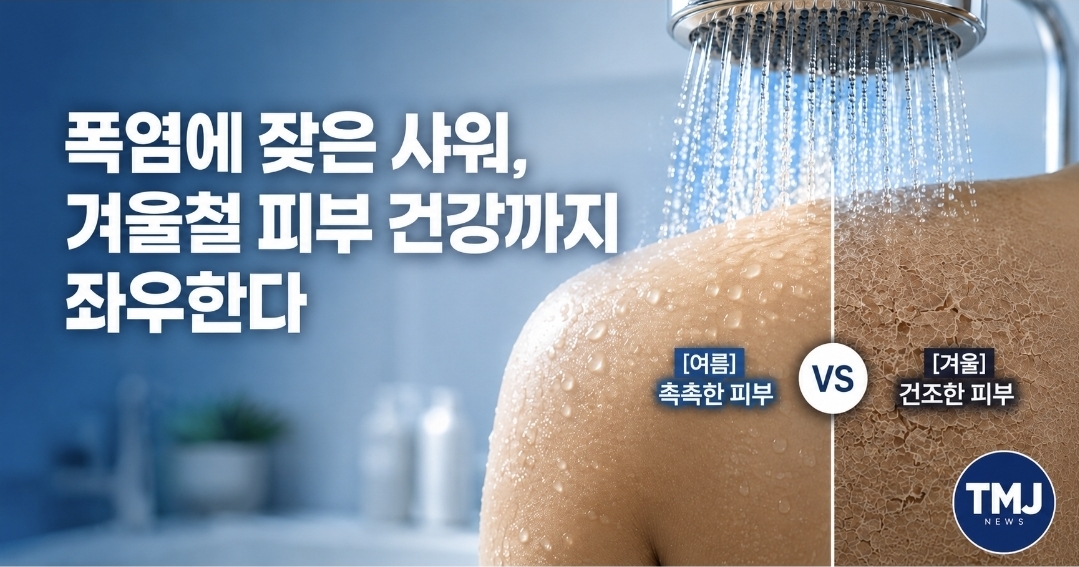
반복적인 세정과 고온 샤워, 피부장벽 손상 위험 높여… 전문가들 “미온수·보습 관리 중요”
연일 30도를 웃도는 폭염이 이어지면서 샤워 횟수가 자연스럽게 늘어나고 있다. 출근 전과 퇴근 후, 취침 전까지 하루 2~3회 이상 샤워하는 사람도 적지 않다. 더위를 식히고 땀과 노폐물을 제거하기 위한 행동이지만, 피부과 전문의들은 단순히 자주 씻는 것보다 피부장벽(Skin Barrier)을 보호하는 것이 더 중요하다고 강조한다.
피부장벽, 건강한 피부를 지키는 첫 번째 방어선
피부의 가장 바깥층인 각질층(Stratum Corneum)은 외부 자극과 세균, 오염물질로부터 피부를 보호하고 체내 수분 손실을 막는 역할을 한다. 특히 세라마이드(Ceramide), 천연보습인자(NMF, Natural Moisturizing Factor), 지질막(Lipid Barrier)은 피부 수분 균형 유지에 핵심적인 요소다. 그러나 반복적인 샤워와 강한 세정제 사용은 이러한 보호막을 약화시키고 피부장벽 기능을 떨어뜨릴 수 있다.
경피수분손실 증가가 피부 건조의 원인
피부과학에서는 피부 건강 상태를 평가할 때 경피수분손실량(TEWL, Transepidermal Water Loss)을 중요한 지표로 활용한다. TEWL은 피부를 통해 자연스럽게 증발하는 수분의 양을 의미한다. 피부장벽이 건강하면 수분 손실이 적지만, 장벽이 손상되면 수분이 쉽게 증발하면서 건조함과 가려움증, 민감성 피부 증상이 증가할 수 있다. 국제 피부과학 연구에 따르면 반복적인 물 노출과 고온 세정은 TEWL 증가와 피부장벽 기능 저하를 유발할 수 있는 것으로 보고됐다.
찬물 샤워도 무조건 좋은 것은 아니다
폭염 속에서 찬물 샤워는 즉각적인 시원함을 제공한다. 그러나 지나치게 차가운 물은 말초혈관 수축(Peripheral Vasoconstriction)을 유발해 체온 조절에 부담을 줄 수 있다. 반대로 뜨거운 물은 피부 표면의 지질 성분을 제거해 피부 건조를 악화시킬 수 있다. 이에 따라 피부과 전문의들은 일반적으로 35~37℃ 수준의 미온수(Lukewarm Water)를 사용할 것을 권고하고 있다. 미온수는 피부 자극을 줄이면서도 땀과 노폐물을 효과적으로 제거하는 데 도움이 된다.
중요한 것은 샤워 횟수가 아니라 방법
전문가들은 하루 23회 샤워 자체가 문제는 아니라고 설명한다. 다만 매번 강한 비누나 바디워시를 사용하거나 피부를 강하게 문지르는 습관은 피해야 한다고 조언한다. 샤워 시간은 510분 이내로 짧게 유지하고, 겨드랑이·목·등·발 등 땀이 많이 나는 부위를 중심으로 세정하는 것이 바람직하다. 얼굴 역시 뜨거운 물보다는 따뜻한 물로 가볍게 세안하는 것이 피부 자극을 줄이는 데 도움이 된다.
미국피부과학회(AAD)가 권고하는 샤워 수칙
미국피부과학회(AAD, American Academy of Dermatology)는 피부 건조 예방을 위해 ▲510분 이내의 짧은 샤워 ▲3537℃의 미온수 사용 ▲강한 세정제 사용 최소화 ▲샤워 직후 보습제 사용 등을 권고하고 있다. 이는 피부장벽을 보호하고 수분 손실을 최소화하기 위한 기본적인 관리법으로 알려져 있다.
샤워 후 3분, 피부 건강의 골든타임
샤워 후 피부 표면에 남아 있던 수분은 빠르게 증발하기 시작한다. 피부과학계에서는 샤워 직후 3분 이내를 피부 보습의 ‘골든타임(Golden Time)’으로 본다. 이 시기에 보습제를 사용하면 각질층 수분 함량(Corneal Hydration)을 유지하고 경피수분손실량(TEWL)을 줄이는 데 도움이 된다. 미국피부과학회(AAD) 역시 샤워 직후 보습제 사용을 권고하고 있다. 특히 세라마이드(Ceramide), 히알루론산(Hyaluronic Acid), 판테놀(Panthenol), 글리세린(Glycerin) 성분은 피부장벽 유지와 수분 공급에 효과적인 것으로 알려져 있다.
여름 습관이 겨울 피부를 결정한다
여름철에는 높은 습도와 잦은 땀 배출로 인해 피부 건조가 상대적으로 덜 느껴질 수 있다. 그러나 반복적인 세정으로 피부장벽이 약화된 상태가 지속되면 공기가 건조해지는 가을과 겨울철에 피부 당김, 각질 증가, 가려움증 등의 증상이 더욱 뚜렷하게 나타날 수 있다. 전문가들이 여름철 샤워 습관을 강조하는 이유도 여기에 있다. 건강은 특정 계절에만 관리하는 것이 아니라 일상의 작은 습관이 쌓여 만들어지는 결과이기 때문이다.
폭염 시대, 샤워도 건강관리의 일부
기후변화로 폭염이 일상이 된 시대다. 샤워는 더위를 식히기 위한 행동을 넘어 피부 건강을 관리하는 중요한 생활 습관이 되고 있다. 전문가들은 “시원함을 위해 무조건 자주 씻기보다 피부장벽을 보호하는 올바른 샤워 습관을 갖는 것이 중요하다”고 강조한다. 우리 몸은 매일 사용하는 가장 소중한 자산이다. 적절한 물 온도와 짧은 샤워, 그리고 충분한 보습 관리는 건강한 여름뿐 아니라 다가올 겨울의 피부 건강까지 지키는 가장 기본적인 관리법이다.
Frequent Showers During Heat Waves Can Affect Winter Skin Health
Repeated Cleansing and Hot Showers May Damage the Skin Barrier; Experts Emphasize the Importance of Lukewarm Water and Moisturizing
As heat waves continue with temperatures exceeding 30°C (86°F), many people are showering more frequently. It is not uncommon for individuals to take showers two or three times a day—before work, after work, and even before bedtime. While showering helps cool the body and remove sweat and impurities, dermatologists stress that protecting the skin barrier is more important than simply washing more often.
The Skin Barrier: The First Line of Defense
The outermost layer of the skin, known as the stratum corneum, protects the body from external irritants, bacteria, and pollutants while preventing excessive moisture loss. Key components such as ceramides, natural moisturizing factors (NMFs), and the lipid barrier play essential roles in maintaining skin hydration. However, frequent showering and the use of harsh cleansers can weaken these protective structures and impair skin barrier function.
Increased Transepidermal Water Loss Leads to Dry Skin
Dermatologists often use Transepidermal Water Loss (TEWL) as an important indicator of skin health. TEWL refers to the amount of water that naturally evaporates through the skin. When the skin barrier is healthy, moisture loss remains minimal. However, when the barrier is damaged, water evaporates more easily, leading to dryness, itching, and increased skin sensitivity. International dermatological studies have reported that repeated exposure to water and hot cleansing can increase TEWL and reduce skin barrier function.
Cold Showers Are Not Always Better
During extreme heat, cold showers can provide immediate relief. However, excessively cold water may cause peripheral vasoconstriction, placing additional stress on the body’s temperature regulation system. On the other hand, hot water can strip away the skin’s natural lipids, worsening dryness.
For this reason, dermatologists generally recommend using lukewarm water between 35°C and 37°C (95°F–99°F). Lukewarm water helps minimize skin irritation while effectively removing sweat and impurities.
The Method Matters More Than the Frequency
Experts note that taking two or three showers a day is not necessarily harmful. The real concern is the repeated use of strong soaps or body washes and vigorous scrubbing.
Shower sessions should ideally last 5 to 10 minutes, focusing on areas that produce more sweat, such as the underarms, neck, back, and feet. Facial cleansing should also be done with warm rather than hot water to minimize irritation.
American Academy of Dermatology Recommendations
The American Academy of Dermatology (AAD) recommends the following practices to prevent dry skin:
- Limit showers to 5–10 minutes
- Use lukewarm water between 35°C and 37°C
- Minimize the use of harsh cleansers
- Apply moisturizer immediately after showering
These guidelines are intended to protect the skin barrier and reduce moisture loss.
The Three-Minute Golden Time After Showering
Moisture remaining on the skin surface begins to evaporate quickly after a shower. Dermatologists often refer to the first three minutes after showering as the skin’s “golden time” for hydration.
Applying moisturizer during this period helps maintain corneal hydration and reduce TEWL. The AAD also recommends moisturizing immediately after bathing. Ingredients such as ceramides, hyaluronic acid, panthenol, and glycerin are known to be particularly effective in supporting the skin barrier and retaining moisture.
Summer Habits Shape Winter Skin Health
Because humidity levels are higher in summer, people may not notice skin dryness as easily. However, if the skin barrier remains weakened due to repeated cleansing, symptoms such as tightness, flaking, and itching can become much more noticeable during the dry autumn and winter months.
This is why dermatologists place special emphasis on proper shower habits during the summer. Health is not maintained only during specific seasons; it is the result of small daily habits accumulated over time.
In the Era of Extreme Heat, Showering Is Part of Health Management
As climate change makes heat waves increasingly common, showering has become more than a way to cool off—it is now an important part of personal health care.
Experts emphasize that instead of simply showering more often for temporary comfort, people should adopt proper showering habits that protect the skin barrier.
Our bodies are among our most valuable assets. Maintaining the right water temperature, keeping showers brief, and following up with adequate moisturizing are among the simplest yet most effective ways to protect not only skin health during summer but also skin condition throughout the coming winter.
저작권자 © '더미디어저널리스트' 무단전재 및 재배포, AI학습 및 활용 금지
작성자 소개