정치 심층분석 | 2026년 6월 4일
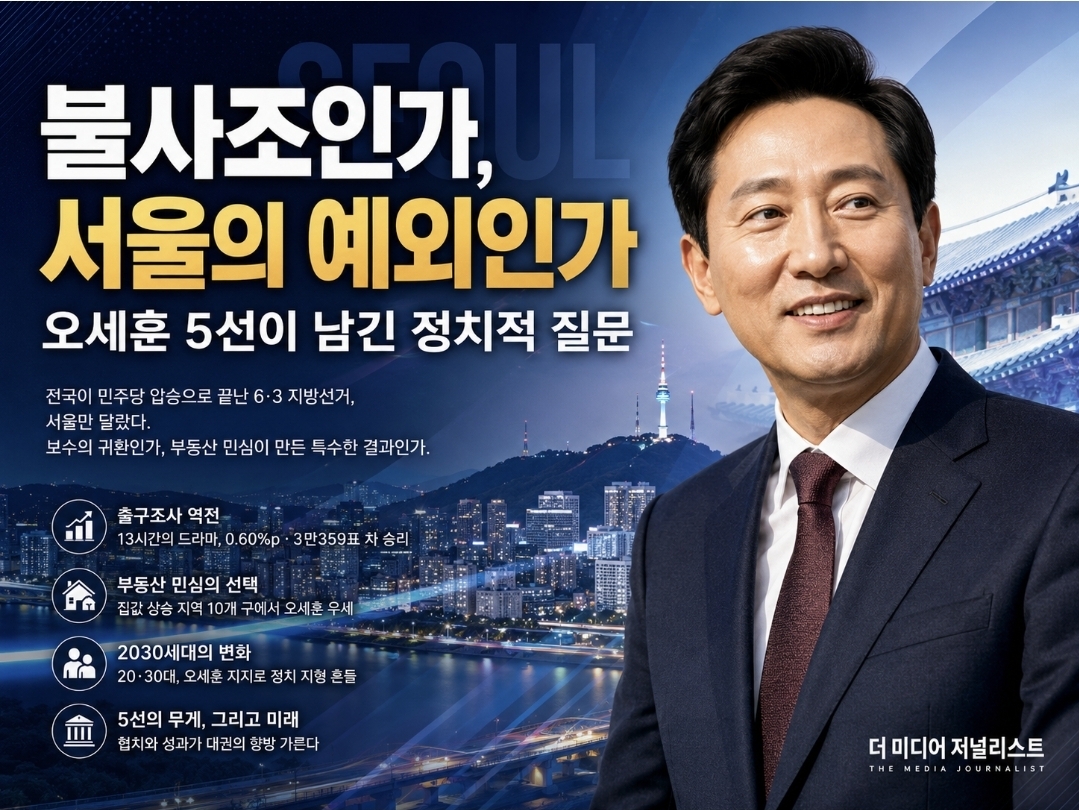
전국이 더불어민주당 우세로 마무리된 6·3 지방선거에서 서울만은 달랐다. 이번 선거 결과는 하나의 질문을 남긴다. 오세훈 서울시장의 5선 성공은 보수 재건의 신호탄일까, 아니면 부동산 민심이 만들어낸 서울만의 특수한 결과일까.
① 출구조사를 뒤집은 13시간의 역전극
6월 3일 밤, 주요 방송사 출구조사는 민주당 정원오 후보의 우세를 예측했다. JTBC 예측조사에서는 정원오 후보가 53.5%, 오세훈 후보가 42.9%로 집계되며 10%포인트 이상의 격차가 나타났다.
그러나 개표가 진행될수록 상황은 달라졌다. 강남·서초 등 보수 강세 지역 표가 반영되면서 격차가 빠르게 줄어들었고, 6월 4일 오전 7시 17분 중앙선거관리위원회 집계에서 오세훈 후보가 처음 역전에 성공했다.
최종 결과는 오세훈 48.94%, 정원오 48.34%. 불과 0.60%포인트, 3만359표 차이였다. 서울시장 선거 역사상 가장 박빙의 승부이자 가장 극적인 역전극으로 기록됐다.
전문가들은 이번 출구조사 오차의 원인으로 세 가지를 지목한다.
첫째는 높은 사전투표 비중이다. 서울 사전투표율은 23.84%였고, 전체 투표 가운데 사전투표와 우편투표가 차지하는 비율은 37.6%에 달했다. 현행 제도상 사전투표 기간에는 출구조사가 불가능해 예측 정확도에 한계가 존재한다.
둘째는 이른바 ‘샤이 보수’ 현상이다. 윤석열 전 대통령 탄핵과 비상계엄 논란 이후 보수 성향 유권자들이 정치적 성향을 공개적으로 드러내기를 꺼렸다는 분석이다.
셋째는 송파구 개표 지연이다. 투표용지 부족 사태가 발생한 송파구는 서울 최대 유권자 지역으로, 늦게 반영된 표심이 최종 결과에 영향을 미쳤다.
2025년 제21대 대통령선거에 이어 이번 지방선거에서도 출구조사와 실제 결과 간 괴리가 확인되면서, 사전투표 비중이 높아진 시대에 기존 출구조사 방식의 한계가 다시 한번 드러났다는 평가가 나온다.
② 서울 민심은 왜 전국과 다른 선택을 했나
전국적으로 민주당은 16개 광역단체 가운데 12곳을 차지했다. 이재명 정부의 국정 지지율도 선거 직전까지 높은 수준을 유지했다. 그럼에도 서울만은 다른 결과를 선택했다.
이번 선거를 설명하는 핵심 키워드는 ‘부동산 자산투표(Patrimonial Voting)’다.
오세훈 후보가 승리한 송파·광진·양천·영등포·강동·동작·용산·중·서초·강남 등 10개 자치구를 살펴보면 상당수가 최근 서울 아파트 가격 상승률 상위 지역과 겹친다.
특히 목동 재건축이 진행 중인 양천구, 여의도 개발 기대감이 큰 영등포구, 재건축 이슈가 집중된 강동구 등은 전통적으로 민주당 지지 성향이 상대적으로 강했던 지역이다. 그러나 이번에는 부동산 이슈가 정당 선호를 넘어선 것으로 분석된다.
전문가들은 실수요자들의 주거 불안과 자산가들의 규제 피로감이 동시에 작동했다고 본다. 결국 서울에서는 이념보다 자산 가치에 대한 판단이 투표 행태를 결정했다는 해석이 가능하다.
③ 2030세대가 움직였다
세대별 결과도 눈에 띈다.
출구조사 기준 오세훈 후보는 20대 이하와 30대에서 우위를 보였다. 특히 서울 20대 남성층에서는 압도적인 지지를 받았고, 30대 여성층에서도 우세를 기록했다.
이는 단순한 세대 갈등이 아니라 주거 문제와 미래 자산 형성에 대한 불안이 정치적 선택으로 연결된 결과로 해석된다.
과거에는 민주당의 핵심 지지층으로 분류되던 젊은 세대 일부가 부동산 문제를 계기로 다른 선택을 하기 시작했다는 점에서 정치권이 주목하는 대목이다.
④ 오세훈 5선이 의미하는 정치적 메시지
오세훈 시장은 한국 지방자치 역사상 최초의 5선 광역단체장이 됐다.
2006년 최연소 서울시장 당선, 2010년 재선, 2011년 무상급식 주민투표 이후 자진 사퇴, 2021년 보궐선거 복귀, 2022년 4선, 그리고 2026년 5선까지. 그의 정치 이력은 한국 보수 정치의 흥망을 상징적으로 보여준다.
이번 승리의 가장 큰 의미는 ‘탈윤석열 노선’의 가능성을 보여줬다는 점이다.
오세훈 시장은 친윤계 지도부와 일정한 거리를 유지하며 독자적 정치 행보를 이어왔다. 정치권에서는 이러한 전략이 중도층과 보수층을 동시에 결집시키는 데 성공했다는 평가가 나온다.
특히 탄핵 이후 보수 진영이 심각한 위기를 겪는 상황에서도 서울에서 승리했다는 점은 보수 진영 내부에 중요한 메시지를 던졌다.
⑤ 한동훈과 오세훈, 보수 재편의 두 축
이번 선거 이후 보수 진영의 시선은 자연스럽게 차기 지도체제로 향하고 있다.
정치권에서는 오세훈 서울시장과 한동훈 전 대표가 향후 보수 재편을 이끌 핵심 인물로 부상했다는 평가가 나온다.
두 사람 모두 윤석열 전 대통령과 일정한 거리를 유지하며 독자 노선을 구축했고, 이번 선거에서도 상대적으로 선전했다는 공통점을 갖고 있다.
보수 진영 내부의 주도권 경쟁은 사실상 지금부터 시작됐다고 볼 수 있다.
⑥ 민주당의 압승, 그러나 서울은 놓쳤다
민주당은 이번 지방선거에서 전국적으로 압승했다.
광역단체장 12곳을 확보했고 서울시의회와 자치구청장 선거에서도 우세를 점했다. 지방권력 지형만 놓고 보면 민주당의 독주 체제가 더욱 강화된 셈이다.
그러나 서울시장 선거 패배는 민주당에 뼈아픈 결과로 남는다.
정원오 후보는 이재명 대통령이 공개적으로 힘을 실어준 대표적인 인물이었다. 그런 후보가 서울에서 패배했다는 것은 대통령의 정치적 영향력이 서울 민심에서는 절대적이지 않다는 사실을 보여준다.
무엇보다 이번 결과는 부동산 문제가 여전히 수도권 선거의 핵심 변수임을 재확인시켰다.
⑦ 4기 서울시정, 협치인가 충돌인가
오세훈 시장의 4기 시정은 역설적인 조건에서 출발한다.
시장직은 국민의힘이 지켰지만 서울시의회와 다수 자치구는 민주당이 장악했다. 주요 개발 사업과 예산안은 앞으로도 치열한 정치적 충돌이 예상된다.
신통기획 2.0, 한강 르네상스 2기, 도시경쟁력 강화 정책 등이 추진력을 얻을 수 있을지 여부는 민주당이 장악한 시의회와의 관계에 달려 있다.
결국 앞으로의 4년은 행정 능력뿐 아니라 정치적 협상력이 시험대에 오르는 시간이 될 전망이다.
⑧ 2030 대선을 향한 시계가 움직인다
동시에 대권 시계도 움직이기 시작했다.
2030년 대선은 오세훈 시장의 임기 종료 시점과 맞물린다. 향후 4년간 서울시정 성과는 곧 그의 대권 경쟁력을 평가하는 기준이 될 가능성이 높다.
오세훈 시장은 여러 차례 서울시정 완수를 강조해왔지만, 정치권은 이미 그의 행보를 차기 대권 주자로 평가하기 시작했다.
이번 5선은 정치 인생의 종착역이 아니라 더 큰 무대를 향한 출발선이 될 가능성이 크다.
결론 | 보수의 귀환인가, 서울의 예외인가
오세훈 시장의 5선은 분명 정치적 사건이다.
보수 진영이 가장 어려운 시기에, 이재명 대통령이 공개적으로 지원한 후보를 상대로 승리했고, 출구조사 결과마저 뒤집었다. 단순한 우연이나 행운으로 설명하기 어려운 결과다.
그러나 이번 승리가 곧바로 전국적 보수 재건을 의미한다고 단정하기도 이르다.
이번 선거가 서울 부동산 민심이 만들어낸 특수한 결과였는지, 아니면 보수 정치의 새로운 출발점이었는지는 앞으로 4년 동안의 서울시정이 답하게 될 것이다.
집값이 잡히면 민심의 이유는 사라질 수 있다. 반대로 집값 문제가 계속된다면 그 책임 또한 달라질 수 있다.
서울은 다시 대한민국 정치의 중심 전장이 됐다.
Phoenix or Exception? — What Oh Se-hoon’s Fifth Term Really Means
Political Analysis | June 4, 2026
While the Democratic Party secured a sweeping victory across the country in the June 3 local elections, Seoul stood apart.
The result leaves a critical question: Does Mayor Oh Se-hoon’s unprecedented fifth term signal the beginning of a conservative revival, or is it merely a unique outcome driven by Seoul’s real-estate-centered political landscape?
1. The 13-Hour Comeback That Defied Exit Polls
On election night, major broadcasters projected a comfortable victory for Democratic Party candidate Jung Won-oh.
JTBC’s forecast showed Jung leading with 53.5% against Oh’s 42.9%, a gap of more than ten percentage points.
But as vote counting progressed, the picture changed dramatically. Ballots from conservative strongholds such as Gangnam and Seocho steadily narrowed the gap. At 7:17 a.m. on June 4, the National Election Commission’s tally showed Oh moving into first place for the first time.
The final result was astonishingly close: Oh Se-hoon received 48.94% of the vote, while Jung Won-oh secured 48.34% — a difference of only 0.60 percentage points, or 30,359 votes.
It became the closest and most dramatic Seoul mayoral election in the city’s history.
Political analysts point to three key reasons for the polling miss.
First, the growing influence of early voting. Early turnout in Seoul reached 23.84%, while advance and absentee ballots accounted for 37.6% of all votes cast. Since exit polling is not permitted during early voting, statistical adjustments remain imperfect.
Second, the phenomenon of the “shy conservative voter.” Following the fallout from former President Yoon Suk Yeol’s impeachment and martial law controversy, some conservative voters may have been reluctant to publicly disclose their political preferences.
Third, delayed vote counting in Songpa District, Seoul’s largest voting district, where ballot shortages slowed the counting process and prolonged the suspense well into the morning.
For the second major election in a row, traditional exit polls struggled to accurately predict a close race in an era of expanding early voting.
2. Why Seoul Voted Differently
Nationally, the Democratic Party won 12 of the country’s 16 metropolitan mayoral and gubernatorial races.
President Lee Jae-myung’s approval ratings remained relatively strong heading into the election. Yet Seoul moved in the opposite direction.
The key concept many analysts use to explain this outcome is patrimonial voting — voting behavior driven primarily by property and asset interests.
The ten districts won by Oh Se-hoon — including Songpa, Yangcheon, Yeongdeungpo, Gangdong, Yongsan, Seocho, and Gangnam — largely overlap with areas that have experienced some of Seoul’s strongest apartment price growth.
Many of these districts, particularly Yangcheon (Mok-dong), Yeongdeungpo (Yeouido), and Gangdong, have traditionally been considered competitive or even Democratic-leaning territory.
This time, however, housing concerns appeared to outweigh party loyalty.
For many voters, concerns about property values, housing affordability, and redevelopment opportunities became more important than ideological identity.
3. Young Voters Shifted the Political Map
One of the election’s most striking developments was the behavior of younger voters.
Exit polls showed Oh leading among voters in their twenties and thirties.
Support among men in their twenties was especially strong, while women in their thirties also leaned toward Oh at a level that would have been difficult to imagine only a few years ago.
The shift reflects growing anxiety over housing affordability and future wealth accumulation.
For many younger Seoul residents, home ownership has become not merely an economic issue but a defining political issue.
As a result, voting patterns that once favored the Democratic Party are beginning to show signs of realignment.
4. The Political Meaning of a Fifth Term
Oh Se-hoon is now the first politician in South Korean history to win five terms as the head of a metropolitan government.
His political journey mirrors the ups and downs of modern conservative politics.
Elected Seoul’s youngest mayor in 2006, re-elected in 2010, forced to resign in 2011 following the school lunch referendum controversy, returning through a by-election in 2021, winning a fourth term in 2022, and now securing a fifth term in 2026.
More importantly, his victory may validate a post-Yoon conservative strategy.
Unlike many figures associated with former President Yoon Suk Yeol, Oh maintained a degree of political independence and cultivated a more moderate image.
Analysts argue that this allowed him to attract both traditional conservatives and centrist voters.
5. Oh Se-hoon and Han Dong-hoon: Two Faces of Conservative Renewal
Attention within conservative circles is already turning toward the future.
Many observers now see Oh Se-hoon and Han Dong-hoon as the two most prominent figures capable of leading the next phase of conservative politics.
Both distanced themselves from hardline pro-Yoon factions and sought broader appeal beyond the conservative base.
Their relative success in this election is likely to intensify competition for leadership within the conservative camp.
The battle for the future of South Korea’s center-right politics may have already begun.
6. A Landslide Victory with One Significant Loss
For the Democratic Party, the election was still a major success.
The party secured control of twelve metropolitan governments, maintained dominance in the Seoul Metropolitan Council, and won most district mayoralties across the capital.
Yet losing the Seoul mayoralty carries symbolic significance beyond numbers.
Jung Won-oh was widely viewed as one of President Lee Jae-myung’s preferred candidates.
His defeat suggests that even a popular administration can face resistance in Seoul when economic concerns, particularly housing issues, dominate voter priorities.
The election serves as a reminder that real estate remains one of the most powerful political forces in South Korea.
7. Governing Seoul Under Divided Power
Oh’s fifth term begins under challenging conditions.
Although he retained the mayor’s office, the Democratic Party continues to dominate the Seoul Metropolitan Council and controls most district governments.
Major initiatives, including redevelopment projects, the “Shintong Planning 2.0” housing program, and the second phase of the Hangang Renaissance project, are likely to face intense scrutiny and political resistance.
Success will depend not only on administrative performance but also on political negotiation and compromise.
8. The Road to 2030 Starts Now
At the same time, attention is turning toward the next presidential election.
The 2030 presidential race coincides with the end of Oh’s fifth mayoral term.
His performance over the next four years will likely shape perceptions of his national leadership potential.
Although Oh continues to emphasize his commitment to Seoul, political observers are already evaluating him as a possible presidential contender.
His fifth victory may not represent the culmination of a career, but rather the beginning of a larger political chapter.
Conclusion | Conservative Revival or a Seoul Exception?
Oh Se-hoon’s fifth term is undeniably a significant political event.
He defeated a candidate closely associated with President Lee Jae-myung, overcame unfavorable exit polls, and achieved victory during one of the most difficult periods for South Korea’s conservative movement.
Yet it remains too early to declare a nationwide conservative resurgence.
Whether this election reflects the rebirth of conservative politics or merely a unique response to Seoul’s housing market anxieties will depend on what happens over the next four years.
If housing pressures ease, the forces that fueled this victory may fade.
If they intensify, responsibility may shift once again.
Either way, Seoul has reclaimed its place as the central battleground of South Korean politics.
저작권자 © '더미디어저널리스트' 무단전재 및 재배포, AI학습 및 활용 금지
작성자 소개