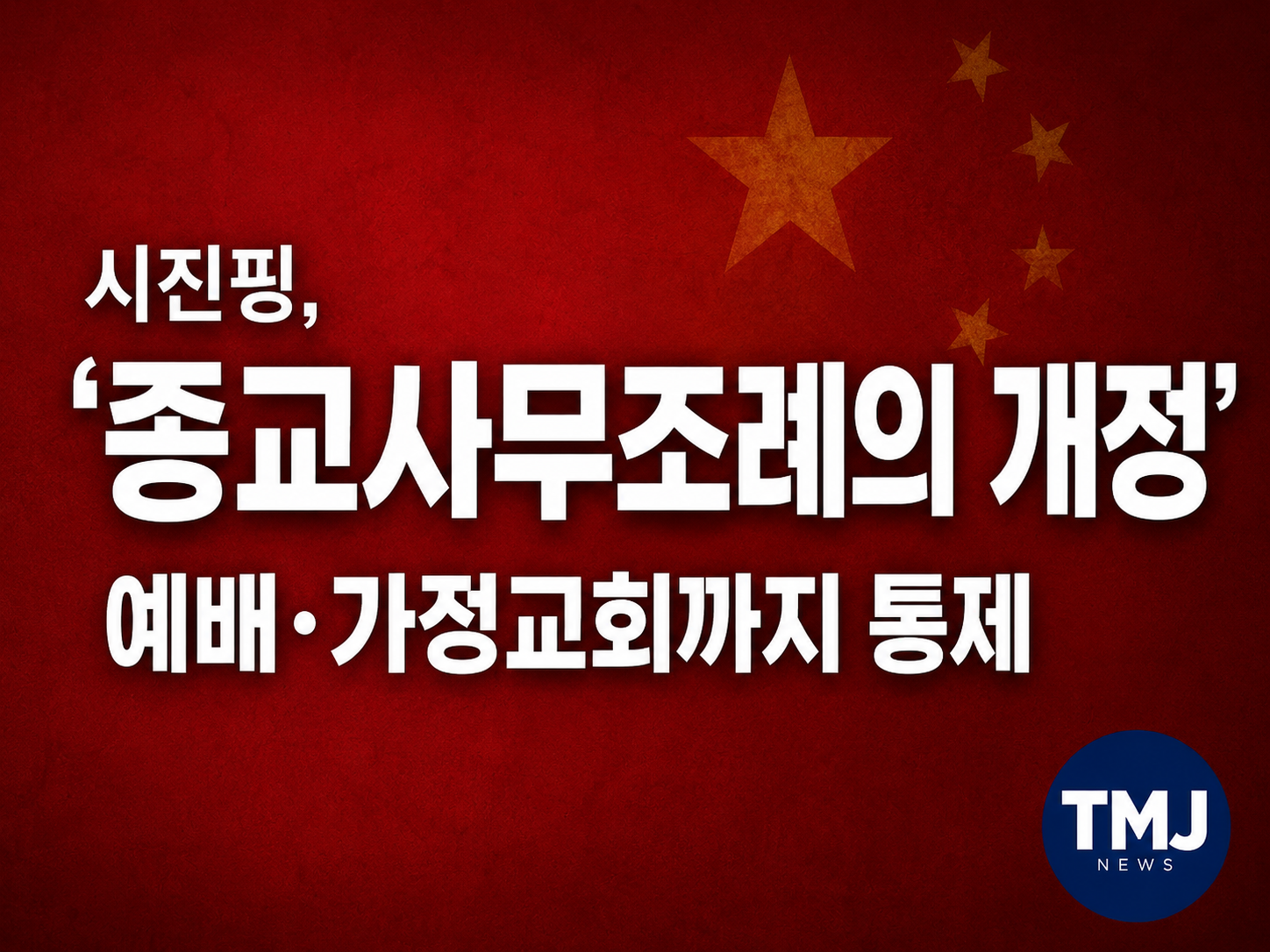
예배 장소·종교교육·온라인 설교·헌금까지 국가 관리 범위에 포함…외신은 독립 교회의 조직망을 겨냥한 통제로 분석
중국의 대표적인 미등록 개신교회인 시온교회 설립자 진밍르 목사가 2026년 7월 석방돼 미국에 있는 가족과 재회했다. 진 목사는 2025년 10월 중국 당국이 여러 지역에서 시온교회 목회자와 관계자들을 동시에 연행할 당시 구금됐다.
로이터는 2025년 10월 13일 보도에서 시온교회 목회자와 직원 등 약 30명이 중국 전역에서 연행됐다고 전했다. 이후 일부가 순차적으로 석방됐으며, 같은 매체의 11월 19일 후속 보도에 따르면 진 목사를 포함한 교회 지도자 18명은 11월 18일 ‘정보통신망 불법 이용’ 혐의로 정식 체포됐다.
진 목사는 2026년 7월 풀려나 미국으로 출국했다. 그러나 로이터는 7월 5일 보도에서 시온교회 관계자 8명이 중국에 계속 구금돼 있다고 전했다. 목회자 한 명의 석방만으로 중국의 종교정책이 바뀌었다고 보기는 어려운 이유다.
가정교회란 무엇인가
중국에서 ‘가정교회’는 가정집에서 예배하는 소규모 모임만을 뜻하지 않는다. 중국 정부가 승인한 개신교 조직에 편입되지 않고 독립적으로 운영되는 교회를 통칭한다. 가정집뿐 아니라 사무실·상가·온라인 공간에서 활동하는 교회도 여기에 포함된다.
AP통신은 2025년 10월 11일 보도에서 시온교회를 중국 당국에 등록하지 않은 대표적인 가정교회로 설명했다. AP에 따르면 진 목사는 광시좡족자치구 베이하이에서 연행됐고, 베이징과 최소 5개 성에서도 교회 지도자들이 붙잡혔다. 당시 교회 측은 인터넷을 통한 종교 콘텐츠 전파가 혐의로 거론됐다고 밝혔다.
중국의 가정교회에는 특정 연령이나 계층만 참여하는 것이 아니다. 퓨리서치센터가 2023년 8월 30일 정리한 연구에 따르면 신흥 도시교회에는 청년과 고학력 전문직 종사자, 해외 유학 경험자도 참여한다. 다만 미등록 교회의 특성과 종교 정체성 공개에 대한 부담 때문에 참여자 규모와 계층 분포를 정확히 측정하기는 어렵다.
시진핑 이전에도 종교통제는 있었다
중국의 종교통제가 시진핑 국가주석 집권 이후 처음 시작된 것은 아니다.
기존 「종교사무조례」는 2004년 11월 30일 공포돼 2005년 3월 1일부터 시행됐다. 당시 조례도 종교단체와 종교활동 장소, 성직자, 재정과 대규모 종교행사를 정부 감독 아래 두었다. 국가는 종교 신앙의 자유와 ‘정상적인 종교활동’의 보호를 명시했지만, 정상성과 합법성의 기준은 정부가 결정했다.
따라서 시진핑 이전에는 중국에서 종교가 자유로웠고, 시진핑 정부가 가정교회를 처음 불법화했다는 설명은 정확하지 않다. 이전에도 미등록 교회는 안정적인 법적 지위를 얻기 어려웠으며 지방 당국의 판단에 따라 예배 중단과 장소 폐쇄, 관계자 조사를 받을 수 있었다.
시진핑 집권기의 변화는 통제의 시작이 아니라 범위의 확대다. 종교시설 중심이었던 기존 관리가 예배·교육·재정·인터넷·해외 교류와 시설 운영 전반으로 구체화됐다.
예배·교육·재정까지 확대한 개정 조례
개정 「종교사무조례」는 2017년 6월 14일 국무원 상무회의에서 통과됐고 같은 해 8월 26일 공포됐다. 시행일은 2018년 2월 1일이다.
개정 조례는 종교 신앙의 자유를 규정하는 동시에 종교단체와 신자에게 사회주의 핵심가치 실천, 국가통일·민족단결·사회안정 유지를 요구했다.
조례 제40조는 신자들의 집단 종교활동을 원칙적으로 종교활동 장소에서 열도록 했다. 제41조는 종교단체·종교학교·등록 종교시설 또는 지정된 임시 장소가 아닌 조직과 장소가 종교활동을 개최하거나 종교적 기부를 받는 것을 금지한다.
미등록 조직은 종교교육을 실시하거나 중국인을 해외 종교훈련과 회의에 보내는 활동도 할 수 없다. 이 구조에서는 가정교회가 정기적으로 예배하고 성경을 가르치며 헌금을 받을 경우 당국이 이를 허가받지 않은 종교활동으로 처리할 수 있다.
조례 제69조에 따라 미등록 조직이나 장소가 종교활동을 열고 기부금을 받으면 당국은 활동 중지를 명령하고 위법소득과 관련 재산을 몰수할 수 있다. 위법소득을 확인할 수 있으면 해당 금액의 1배 이상 3배 이하, 산정할 수 없으면 5만 위안 이하의 벌금을 부과할 수 있다. 범죄가 성립하면 형사책임으로 이어진다.
불법 종교활동에 장소나 자금 등의 편의를 제공한 사람도 행정처분과 벌금 대상이 될 수 있다. 개인의 내면적 신앙보다 조직·장소·교육·재정이 결합된 활동이 직접적인 관리 대상이 되는 구조다.
온라인 설교와 예배 중계도 허가 대상
2022년 3월 1일부터 시행된 「인터넷종교정보서비스관리방법」은 웹사이트·앱·SNS·공식 계정·메신저·라이브방송을 통해 종교정보를 제공하려는 조직에 별도의 허가를 요구한다.
허가 신청자는 중국 안에 합법적으로 설립된 조직이어야 하며 대표자나 주요 책임자도 중국 국적의 본토 주민이어야 한다. 해외 조직과 개인은 중국에서 인터넷 종교정보 서비스를 제공할 수 없다.
허가받은 일부 종교단체·종교학교·등록 종교시설을 제외하면 온라인에서 전도하거나 종교교육을 실시할 수 없다. 설교 게시와 전달, 온라인 종교행사, 예배·미사·세례 등 종교의식의 생중계와 녹화 중계, 인터넷을 이용한 종교 명의의 모금도 제한된다.
시온교회 관계자들에게 적용된 혐의가 단순한 무허가 예배가 아니라 ‘정보통신망 불법 이용’이었다는 사실은 중국의 종교통제가 건물과 집회 장소에서 온라인 연결망으로 확대됐음을 보여준다.
로이터의 해당 보도에 따르면 시온교회는 코로나19 대유행 기간 온라인 설교와 소규모 대면모임을 통해 약 5천 명 규모로 성장하고 여러 도시로 확장됐다. 이는 교회 측이 밝힌 규모다.
종교시설에 공산당 지도와 시진핑 사상 요구
2023년 9월 1일부터 시행된 「종교활동장소관리방법」 제3조는 등록 종교시설이 중국공산당의 지도와 사회주의 제도를 지지하고 ‘시진핑 신시대 중국 특색 사회주의 사상’을 관철해야 한다고 규정한다.
종교의 중국화, 사회주의 핵심가치 실천, 독립·자주·자체 운영, 국가통일과 민족단결 유지도 종교시설의 의무로 제시됐다. 이 규정은 개신교뿐 아니라 중국 정부가 공식적으로 관리하는 불교·도교·이슬람교·천주교·개신교의 등록 시설에 적용된다.
가정교회와 지하 천주교회처럼 국가가 승인한 종교조직에 편입되지 않은 공동체는 이 제도 밖에 놓인다. 이들 공동체가 활동을 계속하면 미등록 조직이나 무허가 종교활동으로 처리될 가능성이 커진다.
외신이 주목한 것은 예배보다 조직망
로이터와 AP통신은 시온교회 사건을 한 지역에서 발생한 예배 단속으로만 다루지 않았다. 두 매체는 중국 여러 지역에서 목회자와 관계자들이 동시에 연행됐고, 교회가 온라인 설교와 기도모임을 통해 지역 밖으로 확장된 점을 함께 전했다.
파이낸셜타임스는 2025년 10월 17일 보도에서 시온교회 단속을 중국 정부가 대규모 미등록 종교조직을 축소하고, 코로나19 기간 온라인으로 확장된 교회망을 소규모 사적 모임 수준으로 제한하려는 정책의 연장선으로 분석했다.
외신 보도의 중심에는 미등록 교회의 조직적 독립성이 있다. 시온교회는 중국 정부의 공식 관리망 밖에서 자체 지도자와 예배처소, 온라인 교육망을 운영했다. 중국 당국은 이를 법률과 행정질서 밖의 활동으로 보는 반면, 외신과 종교자유단체는 평화적인 예배도 국가 승인 여부에 따라 불법으로 처리될 수 있다고 비판한다.
다만 이러한 분석을 중국 정부가 인정한 것은 아니다. 중국 정부는 종교 탄압이 아니라 불법 종교활동과 외부 침투, 사회질서 문제를 법에 따라 관리하는 것이라는 입장이다.
국가 밖의 종교, 무엇을 관리하는가
예배 장소, 종교교육, 해외 교류, 헌금과 재정, 온라인 설교, 종교시설 운영자의 정치적 의무—앞서 살펴본 여섯 영역은 결국 신자가 어디에서 모이는지, 누가 가르치고 운영하는지, 자금은 어떻게 조성·사용되는지, 정보는 어떤 경로로 전달되는지, 해외의 누구와 연결되는지를 국가가 확인하는 장치다.
중국은 개인의 신앙 자체를 전면 금지한다고 밝히지 않는다. 그러나 종교가 국가 관리 범위 밖에서 지도자·재정·교육·정보망을 갖춘 공동체로 성장하면 이를 행정과 치안의 문제로 다룬다.
기자의 시각
종교공동체에는 정기적으로 모이는 신자와 지도자, 교육체계와 공동재정이 형성된다. 교회는 헌금으로 장소를 임차하고 목회자를 지원하며 교육·출판·선교·구호사업을 운영할 수 있다. 온라인 서비스와 해외 교류가 더해지면 여러 지역을 연결하는 자체 조직도 구축할 수 있다.
중국 당국이 관리하려는 대상은 개인의 기도나 경전 읽기에 한정되지 않는다. 정부가 정한 틀 밖에서 사람·자금·정보·지도력이 장기간 결집하는 구조가 핵심이라고 해석할 수 있다.
중국 사회의 자유 요구가 커졌기 때문에 2017년 조례가 개정됐다고 보는 것은 성급한 결론이다. 코로나19 봉쇄 반대에서 표현의 자유 요구로 확산한 백지시위는 2022년에 발생해 개정 조례 시행보다 뒤에 있다.
다만 독립적인 종교공동체가 사회문제와 권리 요구를 공유하는 기반으로 기능할 가능성을 당국이 사전에 관리하려 한다는 해석은 가능하다. 이는 중국 정부가 공식적으로 밝힌 개정 이유가 아니라 법령의 규제 범위와 실제 단속 대상을 토대로 한 기자의 분석이다.
헌금 통제, 회계관리인가 조직 통제인가
중국이 공산국가라는 이유로 개인의 재산을 인정하지 않는다는 설명은 정확하지 않다. 개정 조례는 등록된 종교단체·종교학교·종교활동 장소가 보유하거나 사용하는 합법적 재산과 수익을 보호한다고 규정한다.
문제는 어떤 조직과 자산이 합법적인 종교재산으로 인정되는가다. 미등록 가정교회의 예배가 불법 종교활동으로 판단되면 그곳에서 모은 헌금도 법적으로 보호받기 어렵다.
2022년 6월 1일부터 시행된 「종교활동장소 재무관리방법」 제25조는 등록 종교시설이 단체 명의의 은행계좌를 개설하고 모든 수입을 해당 계좌에 입금하도록 했다. 개인 계좌나 개인 명의의 알리페이·위챗을 통한 수납은 금지된다.
제26조는 기부금 영수증 발급과 장부 기록을 요구한다. 헌금함은 지정된 3명이 함께 열어 금액을 확인하고 서명한 뒤 회계담당자에게 인계해야 한다.
이 제도에는 종교지도자의 횡령과 종교재산의 사유화를 막고 회계 투명성을 확보하려는 목적이 있다. 그러나 미등록 가정교회는 등록 시설을 전제로 한 공식 계좌와 회계제도에 들어가기 어렵다.
헌금이 차단되면 예배 장소 임차와 목회자 지원, 성경교육, 출판·선교·복지사업도 영향을 받는다. 종교재정 규정은 등록 시설의 회계 투명성을 높이는 제도인 동시에 정부가 정한 틀 밖의 종교조직이 운영 기반을 유지하기 어렵게 만드는 장치로 작동할 수 있다.
‘시진핑 우상화’라는 표현은 가능한가
「종교사무조례」는 시진핑을 신이나 종교적 대상으로 숭배하라고 명령하지 않는다. 이를 ‘시진핑 숭배법’이라고 부르는 것은 실제 법령 내용보다 과장된 표현이다.
다만 앞서 살펴본 「종교활동장소관리방법」 제3조는 등록 종교시설의 운영 조건에 공산당 지도와 시진핑 사상의 관철을 포함한다. 정치적으로는 종교적 권위보다 공산당의 지도권을 우선하고 지도자 중심의 충성체계를 강화하는 정책이라는 비판이 가능하다.
그러나 이것이 시진핑을 종교적 신으로 섬기도록 법제화했다는 뜻은 아니다. 법령의 내용과 정치적 개인숭배에 대한 평가는 구분해야 한다.
신학적으로 보면 기독교는 국가의 합법적인 권위를 인정하지만 국가나 지도자의 이념을 하나님과 신앙 양심보다 높은 권위로 둘 수 없다고 본다.
정부가 시설 안전과 회계를 관리하는 범위를 넘어 설교·교육·교회 지도체계를 정치이념에 맞추도록 요구한다면, 기독교적 관점에서는 국가권력이 신앙의 최종 기준을 대신하는 우상화 문제를 제기할 수 있다. 이는 법률적 판단이 아니라 본지의 신학적 해석이다.
중국 정부의 공식 논리와 외신·인권단체의 비판
중국 정부는 개정 조례의 목적으로 종교 신앙의 자유와 합법적인 권익 보호, 종교 극단주의와 범죄 억제, 외국 세력의 침투 차단, 국가통합과 사회질서 유지를 제시한다.
중국 정부는 인터넷 종교정보와 외국인의 종교활동을 별도로 규정한 것도 변화한 종교활동 방식에 행정절차를 적용하고 사회질서를 유지하기 위한 것이라고 설명한다.
반면 외신과 국제인권단체는 중국 정부가 합법과 불법의 기준을 독점하면서 폭력이나 정치활동과 관계없는 미등록 예배까지 제재할 수 있다고 비판한다.
휴먼라이츠워치는 2026년 4월 15일 공개한 보고서에서 중국 당국이 지하 천주교 공동체에 국가가 관리하는 공식 교회 가입을 압박하고, 성직자와 신자에 대한 이념 통제·감시·이동 제한을 강화했다고 밝혔다. 휴먼라이츠워치는 중국 가톨릭 공동체의 상황을 아는 관계자와 전문가들을 면담하고 중국 정부 문서를 검토했다고 설명했다.
양측의 입장은 결국 누가 합법적인 종교활동의 범위를 정하는가에서 갈린다. 중국 정부는 법에 따른 행정관리라고 주장하지만, 비판하는 쪽은 국가의 승인 여부가 신앙 공동체의 존립을 결정하는 구조 자체를 문제로 본다.
한국 교회와 선교단체에 미치는 영향
2025년 5월 1일부터 시행된 「중화인민공화국 경내 외국인 종교활동 관리규정 실시세칙」은 외국인의 집단 종교활동을 등록된 종교시설이나 성급 종교사무부서가 승인한 임시 장소에서 열도록 규정한다.
외국인은 중국법을 준수하고 중국 종교의 ‘독립·자주·자체 운영’ 원칙을 존중하며 정부 관리를 받아야 한다.
이 규정 제29조는 외국인이 허가 없이 설교하거나 집단 종교활동을 개최하는 행위, 중국 시민을 신자로 만들거나 종교 교직자를 임명하는 행위, 종교교육과 훈련을 실시하는 행위, 중국 조직과 시민에게서 종교적 기부를 받는 행위, 인터넷을 이용해 불법 종교활동을 진행하는 행위 등을 금지한다.
이에 따라 한국 교회와 선교단체가 중국에서 진행하는 가정교회 지원, 비공식 목회자 교육, 종교자료 배포와 온라인 성경공부의 법적 위험이 커질 수 있다.
한국 외교부 해외안전여행 정보에는 2020년 닝샤후이족자치구에서 선교활동이 적발된 한국인이 구류와 강제출국 처분을 받은 사례가 기재돼 있다.
한국 교회가 중국 정부의 승인을 받지 않은 현지인을 대상으로 설교·성경교육·종교자료 배포를 진행하면 한국인 활동자는 구류와 강제출국, 향후 입국 제한을 받을 수 있다. 중국인 참여자도 조사나 행정처분 대상이 될 가능성이 있다.
국제 외교 의제로 확장되는 종교 문제
앞서 언급한 진밍르 목사 사례처럼 중국에서 구금된 종교지도자의 문제는 정상급 외교협상의 의제로 올라갈 수 있다. 진 목사의 석방 문제는 미국 대통령이 중국 국가주석에게 직접 제기한 외교 현안으로 다뤄졌다.
이는 중국의 종교정책이 국내 행정을 넘어 미국 등 관련 국가의 대중국 외교와 결합할 수 있음을 보여준다.
천주교에서는 중국 내 주교 임명과 성직자 관리가 중국과 바티칸 관계의 핵심 사안으로 이어져 왔다. 개신교 목회자의 구금과 석방, 외국 종교기관의 중국 활동도 인권·외교 현안으로 다뤄질 가능성이 있다.
향후 중국과 해외 종교기관의 교류는 중국 정부가 인정한 공식 종교조직과 사업을 중심으로 재편될 가능성이 크다. 반면 가정교회에 대한 재정지원, 비공식 교육과 온라인 예배 교류는 더 위축될 것으로 예상된다.
종교를 허용하되 독립성은 제한
중국의 종교정책은 모든 종교를 전면 금지하는 방식이 아니다. 국가 관리 범위 안의 종교단체와 장소에서 이뤄지는 활동은 허용되며, 해당 시설의 합법적 재산도 보호된다.
그러나 공식 관리망 밖에서 독립적인 지도자와 교육, 재정과 온라인 네트워크가 형성되면 종교활동은 행정·치안 또는 형사 문제로 전환될 수 있다. 중국 정부는 예배 장소뿐 아니라 설교자, 교회재정, 온라인 계정과 지역 간 연락망까지 관리 대상으로 삼고 있다.
가정교회가 주목받는 이유는 예배 장소가 가정이기 때문만은 아니다. 정부의 지원 없이 자체 지도자와 재정, 교육과 온라인 조직을 유지할 수 있기 때문이다.
결국 개정 「종교사무조례」의 핵심은 종교를 없애는 데 있지 않다. 종교가 존재할 수 있는 장소와 조직, 자금과 정보 전달 방식을 국가가 정하는 데 있다. 중국이 허용하는 것은 정부가 확인하고 감독할 수 있는 신앙이다. 공산당과 독립된 종교공동체의 운영은 그 범위 밖에 놓일 가능성이 크다.
Xi Jinping Revises Religious Affairs Regulations, Extending Control to Worship and House Churches
Places of worship, religious education, online preaching and offerings brought under state oversight…Foreign media focus on the organizational networks of independent churches
Pastor Jin Mingri, founder of Zion Church, one of China’s most prominent unregistered Protestant churches, was released in July 2026 and reunited with his family in the United States. Jin had been detained in October 2025 when Chinese authorities simultaneously apprehended Zion Church pastors and staff members in multiple regions.
Reuters reported on October 13, 2025, that approximately 30 Zion Church pastors and staff members had been detained across China. Some were subsequently released. According to a Reuters follow-up report on November 19, 18 church leaders, including Jin, were formally arrested on November 18 on suspicion of the “illegal use of information networks.”
Jin was released and allowed to leave for the United States in July 2026. Reuters reported on July 5, however, that eight Zion Church members remained in detention in China. The release of a single pastor does not necessarily indicate a broader change in China’s religious policy.
What Is a House Church?
In China, the term “house church” does not refer only to a small group gathering for worship in a private home. It broadly describes Protestant churches that operate independently without joining the officially approved Protestant organizations overseen by the Chinese government.
Such churches may conduct their activities in private homes, offices, commercial buildings and online spaces.
The Associated Press reported on October 11, 2025, that Zion Church was a leading example of a house church not registered with the Chinese authorities. According to the AP, Jin was detained in Beihai, in the Guangxi Zhuang Autonomous Region, while church leaders were also apprehended in Beijing and at least five provinces. Church representatives said at the time that the distribution of religious content over the internet had been cited in connection with the allegations.
China’s house churches are not attended by people from only one age group or social class. Research summarized by the Pew Research Center on August 30, 2023, found that emerging urban churches also attract young adults, highly educated professionals and people who have studied abroad.
However, because of the unregistered status of many churches and the risks associated with disclosing one’s religious identity, it is difficult to measure accurately the size and social composition of these communities.
Religious Control Existed Before Xi Jinping
Religious control in China did not begin after Xi Jinping became the country’s leader.
The original Religious Affairs Regulations were promulgated on November 30, 2004, and took effect on March 1, 2005. Those regulations already placed religious organizations, places of religious activity, clergy, finances and large religious events under government supervision.
The state formally guaranteed freedom of religious belief and the protection of “normal religious activities.” However, the government retained the authority to determine what qualified as normal and lawful.
It is therefore inaccurate to claim that religion was freely practised before Xi or that his administration was the first to make house churches illegal. Even before Xi came to power, unregistered churches had difficulty securing a stable legal status and could face the suspension of worship services, closure of meeting places and investigations of their members, depending on the decisions of local authorities.
The principal change under Xi has not been the creation of religious control, but its expansion. A system once focused primarily on religious venues has become more detailed and comprehensive, extending to worship, education, finance, the internet, overseas exchanges and the management of religious facilities.
Revised Regulations Expand Control Over Worship, Education and Finance
The revised Religious Affairs Regulations were adopted at an executive meeting of the State Council on June 14, 2017, promulgated on August 26 of the same year and implemented on February 1, 2018.
The regulations recognize freedom of religious belief while also requiring religious organizations and believers to practise core socialist values and contribute to national unity, ethnic solidarity and social stability.
Article 40 provides that collective religious activities should, in principle, be conducted at designated places of religious activity. Article 41 prohibits organizations and venues other than religious groups, religious schools, registered religious facilities or officially designated temporary locations from organizing religious activities or receiving religious donations.
Unregistered organizations are also prohibited from providing religious education or sending Chinese citizens abroad for religious training and conferences.
Under this structure, a house church that regularly holds worship services, teaches the Bible and receives offerings may be treated by the authorities as conducting unauthorized religious activities.
Under Article 69, authorities may order an unregistered organization or venue to stop its religious activities and may confiscate illegal income and related property. If the amount of illegal income can be calculated, a fine of between one and three times that amount may be imposed. If it cannot be calculated, a fine of up to 50,000 yuan may be issued. Criminal liability may follow if the conduct is deemed to constitute a crime.
People who provide venues, funding or other forms of assistance for unlawful religious activities may also face administrative penalties and fines.
The system therefore targets not simply personal faith, but religious activity that combines organization, physical space, education and finance.
Online Preaching and Worship Broadcasts Also Require Authorization
The Measures for the Administration of Internet Religious Information Services, which took effect on March 1, 2022, require organizations to obtain separate authorization before providing religious information through websites, applications, social media, official accounts, messaging services or livestreaming platforms.
Applicants must be legally established organizations in China, and their legal representatives or principal officers must be mainland Chinese citizens. Foreign organizations and individuals may not provide internet-based religious information services within China.
Except for certain authorized religious organizations, religious schools and registered religious venues, online evangelism and religious education are prohibited. Restrictions also apply to publishing or distributing sermons, organizing religious activities online, livestreaming or uploading recorded worship services, Masses, baptisms and other religious ceremonies, and collecting donations in the name of religion over the internet.
The fact that Zion Church members were accused not merely of unauthorized worship, but of the “illegal use of information networks,” demonstrates how religious control has expanded from buildings and physical gatherings to online networks.
According to the Reuters report, Zion Church said it had grown to approximately 5,000 members and expanded into multiple cities through online preaching and small in-person gatherings during the COVID-19 pandemic. The figure was provided by the church.
Religious Venues Required to Support Communist Party Leadership and Xi Jinping Thought
Article 3 of the Measures for the Administration of Religious Activity Venues, which took effect on September 1, 2023, requires registered religious facilities to support the leadership of the Chinese Communist Party and the socialist system, and to implement Xi Jinping Thought on Socialism with Chinese Characteristics for a New Era.
The measures also require religious venues to advance the Sinicization of religion, practise core socialist values, uphold the principles of independence, autonomy and self-administration, and safeguard national unity and ethnic solidarity.
The provisions apply not only to Protestant churches, but also to registered facilities associated with Buddhism, Taoism, Islam, Catholicism and Protestantism under official Chinese government administration.
House churches and underground Catholic communities that do not join state-approved religious organizations remain outside this structure. If they continue their activities, they may be treated as unregistered organizations or as conducting unauthorized religious activities.
Foreign Media Focus on Organizational Networks, Not Worship Alone
Reuters and the Associated Press did not treat the Zion Church case simply as the suppression of a worship service in a single location. Both outlets highlighted the fact that pastors and church workers had been detained simultaneously in multiple parts of China and that the church had expanded beyond its local base through online preaching and prayer meetings.
The Financial Times reported on October 17, 2025, that the crackdown on Zion Church could be understood as part of a broader government policy to reduce the size of large unregistered religious organizations and push church networks that had expanded online during the pandemic back into small, private gatherings.
The central issue in foreign media coverage was the organizational independence of unregistered churches. Zion Church maintained its own leaders, meeting places and online education network outside the government’s official system of religious administration.
Chinese authorities regard such activities as taking place outside the legal and administrative order. Foreign media and religious freedom organizations, however, argue that even peaceful worship can be treated as illegal when it lacks government approval.
The Chinese government does not accept this interpretation. Its position is that the authorities are not persecuting religion, but regulating unlawful religious activities, foreign infiltration and threats to social order in accordance with the law.
Religion Outside the State: What Is Being Controlled?
Places of worship, religious education, overseas exchanges, offerings and finances, online preaching, and the political obligations imposed on religious venue operators—these six areas ultimately enable the state to determine where believers meet, who teaches and leads them, how funds are raised and spent, how information is distributed and who maintains overseas connections.
China does not claim to prohibit personal religious belief in its entirety. However, when religion develops outside the sphere of state administration into a community with its own leadership, finances, educational system and information network, the authorities may treat it as an administrative and public-security issue.
The Journalist’s View
A religious community naturally develops regular participants, leaders, educational structures and shared finances. A church may use offerings to rent meeting places, support pastors and operate educational, publishing, missionary and charitable programs. When online services and overseas connections are added, it may also build an independent network linking multiple regions.
The object of Chinese state control is therefore not limited to private prayer or the reading of scripture. The more significant issue is the long-term concentration of people, money, information and leadership outside the framework established by the government.
It would be premature to conclude that the 2017 regulations were revised because demands for freedom were growing in Chinese society. The White Paper protests, which began as opposition to COVID-19 lockdowns and expanded into calls for freedom of expression, occurred in 2022—years after the revised regulations had taken effect.
Nevertheless, it is possible to interpret the policy as an attempt to prevent independent religious communities from becoming spaces where social issues and demands for rights might be shared.
This is not the official explanation given by the Chinese government. It is the journalist’s analysis based on the scope of the regulations and the organizations and activities targeted in actual enforcement.
Control of Offerings: Financial Oversight or Organizational Control?
It would be inaccurate to claim that China, as a communist country, does not recognize personal property. The revised regulations protect the lawful property and income held or used by registered religious organizations, religious schools and places of religious activity.
The central question is which organizations and assets are recognized as lawful religious property. If the worship activities of an unregistered house church are classified as unlawful, the offerings collected there may also be denied legal protection.
Article 25 of the Measures for the Financial Management of Places of Religious Activity, which took effect on June 1, 2022, requires registered religious facilities to open bank accounts in the name of the organization and deposit all income into those accounts. Receiving funds through personal bank accounts or personal Alipay and WeChat accounts is prohibited.
Article 26 requires receipts to be issued for donations and the amounts to be entered into accounting records. Donation boxes must be opened by three designated people, who count the money, sign the record and transfer it to the person responsible for accounting.
The measures are intended in part to prevent embezzlement and the private appropriation of religious property, and to improve financial transparency. Unregistered house churches, however, face difficulty entering a financial and accounting system that presupposes official registration.
If offerings are cut off, churches may be unable to rent worship spaces, support pastors or operate Bible education, publishing, missionary and charitable programs.
The financial rules can therefore function both as a system for improving transparency at registered religious venues and as a mechanism that makes it more difficult for religious organizations outside the government’s framework to maintain an operational base.
Is It Accurate to Call This the “Idolization of Xi Jinping”?
The Religious Affairs Regulations do not order believers to worship Xi Jinping as a god or religious figure. Describing them as a “law requiring the worship of Xi Jinping” would exaggerate what the regulations actually say.
However, as discussed earlier, Article 3 of the Measures for the Administration of Religious Activity Venues incorporates Communist Party leadership and the implementation of Xi Jinping Thought into the operating requirements for registered religious facilities.
From a political perspective, the policy may be criticized for placing Communist Party authority above religious authority and reinforcing a system of loyalty centred on the country’s leader.
This does not mean, however, that China has legally defined Xi Jinping as a religious deity. The contents of the law must be distinguished from political assessments of a personality cult.
From a Christian theological perspective, Christianity recognizes the lawful authority of the state but does not permit the ideology of a government or political leader to be placed above God or the believer’s conscience.
If the state moves beyond regulating building safety and financial accountability and requires preaching, religious education and church leadership to conform to a political ideology, Christians may raise the concern that state power is attempting to replace the ultimate authority of faith.
This is a theological interpretation by this publication, not a legal conclusion.
The Chinese Government’s Position and Criticism from Foreign Media and Human Rights Groups
The Chinese government states that the revised regulations are intended to protect freedom of religious belief and lawful rights, suppress religious extremism and crime, prevent foreign infiltration, maintain national unity and preserve social order.
It also argues that the separate regulation of online religious information and foreign religious activity is necessary to apply administrative procedures to changing forms of religious practice and to maintain public order.
Foreign media and international human rights groups contend, however, that the government monopolizes the authority to define what is lawful and unlawful, allowing it to punish unregistered worship even when it is unrelated to violence or political activity.
Human Rights Watch reported on April 15, 2026, that Chinese authorities were pressuring underground Catholic communities to join state-administered official churches and had intensified ideological control, surveillance and restrictions on the movement of clergy and believers.
Human Rights Watch said it interviewed people and experts familiar with Catholic communities in China and reviewed Chinese government documents.
The dispute ultimately centres on who has the authority to define the boundaries of lawful religious activity. The Chinese government presents the system as administration under the law, while critics challenge a structure in which government approval can determine whether a faith community is allowed to exist.
Effects on Korean Churches and Missionary Organizations
The Detailed Rules for the Implementation of the Provisions on the Administration of Religious Activities of Foreigners within the Territory of the People’s Republic of China took effect on May 1, 2025.
The rules require collective religious activities involving foreigners to be held at registered religious venues or temporary locations approved by provincial-level religious affairs authorities.
Foreigners must comply with Chinese law, respect the principles of independence, autonomy and self-administration governing religion in China, and accept government oversight.
Article 29 prohibits foreigners from preaching or organizing collective religious activities without authorization, converting Chinese citizens or appointing religious clergy, conducting religious education and training, receiving religious donations from Chinese organizations and citizens, and using the internet to conduct unlawful religious activities.
As a result, Korean churches and missionary organizations may face increased legal risks when supporting house churches in China, providing unofficial training to pastors, distributing religious materials or conducting online Bible studies.
The Republic of Korea’s Ministry of Foreign Affairs states in its overseas safety information that a Korean national discovered carrying out missionary activity in the Ningxia Hui Autonomous Region in 2020 was detained and deported.
If Korean churches preach, provide Bible education or distribute religious materials to local residents without Chinese government authorization, Korean participants may face detention, deportation and restrictions on future entry. Chinese participants may also be investigated or subjected to administrative penalties.
Religious Issues Expanding into International Diplomacy
As the previously mentioned case of Pastor Jin Mingri demonstrates, the detention of religious leaders in China may become an issue in negotiations at the highest diplomatic level. Jin’s release was raised directly by the president of the United States with the Chinese president.
This shows that China’s religious policies can move beyond domestic administration and become connected to the foreign policies of the United States and other countries toward China.
In Catholic affairs, the appointment of bishops and the administration of clergy in China have long been central issues in relations between China and the Vatican. The detention and release of Protestant pastors and the activities of foreign religious organizations in China may likewise become matters of human rights and international diplomacy.
Religious exchanges between China and overseas institutions are likely to be reorganized increasingly around officially recognized religious organizations and approved programs.
Financial support for house churches, unofficial education and online worship exchanges, by contrast, are expected to become more restricted.
Religion Is Permitted, but Independence Is Restricted
China’s religious policy does not prohibit every form of religion. Activities conducted by religious organizations and at venues within the sphere of state administration are permitted, and the lawful property of those institutions is protected.
However, when independent leaders, education systems, finances and online networks develop outside official administrative structures, religious activity may be transformed into an administrative, public-security or criminal matter.
The Chinese government now treats not only places of worship, but also preachers, church finances, online accounts and interregional communication networks as objects of state supervision.
House churches attract government attention not simply because some meet in private homes. They can maintain their own leaders, finances, educational programs and online organizations without government support.
The central purpose of the revised Religious Affairs Regulations is therefore not necessarily to eliminate religion itself. It is to determine the places,
저작권자 © '더미디어저널리스트' 무단전재 및 재배포, AI학습 및 활용 금지
작성자 소개